
Motorcycle Investor mag
Subscribe to our free email news
Wasp World
Piaggio's Vespa celebrates 80
years
April 2026, by Guy
'Guido' Allen
Born out of poverty and necessity, Piaggio's Vespa line started as cheap transport and quickly developed into a cultural phenomenon. On April 23, 2026, it celebrated its 80th anniversary
Here's our quick
historic backgrounder...
The Vespa (‘Wasp’) started out as a product from what
was, pre-WWII, the giant Piaggio firm that made its name
in heavy transport and particularly rail.
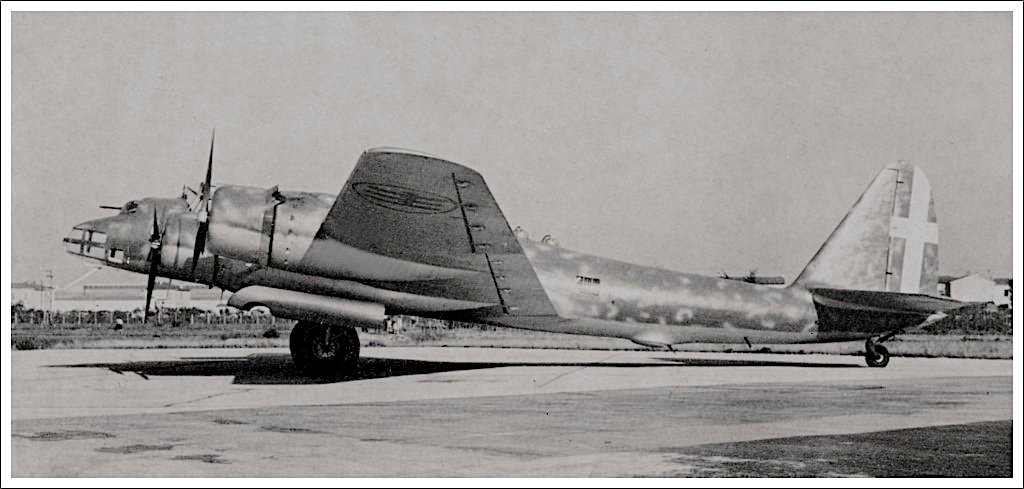
It also developed high-end aeronautical expertise and was
making a range of aircraft during the war. Above is a
P.108 bomber.
WWII turned out to be ugly for Piaggio, which saw much of
its capability destroyed.
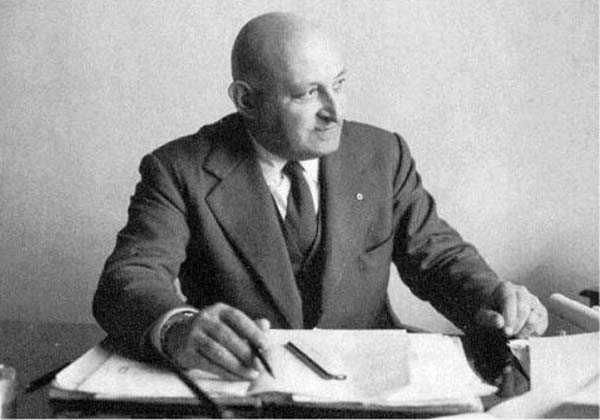
Post-war it saw a need in Italy and the rest of Europe
for cheap transport, and the design task was given to
distinguished aeronautical engineer General Corradino
D’Ascanio (above).
The inspiration for the design is likely to have come from the Cushman scooters or minibikes commonly used by the USA military, some of which were dropped out of aircraft during paratroop operations.
D’Ascanio initially worked on a scooter design with
Ferdinando Innocenti of Lambretta fame, but the two butted
heads and parted company. As a result, D’Ascanio teamed up
with Enrico Piaggio, with whom he had developed a working
relationship during WWII.
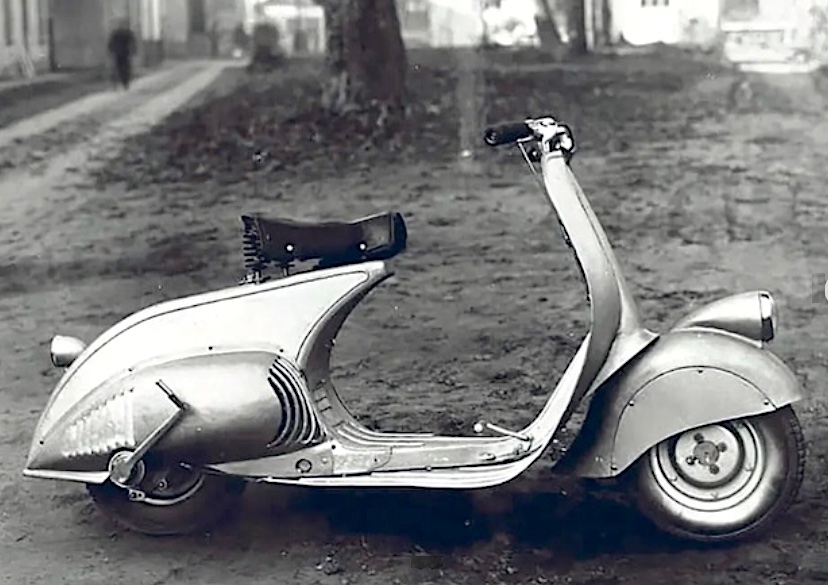
The original 1946 design (above) included a rear-mounted
engine located as close as possible to the driven wheel
(no rear suspension), a leg shield to protect users from
road muck, and a front suspension design that borrowed
then-current aircraft thinking.
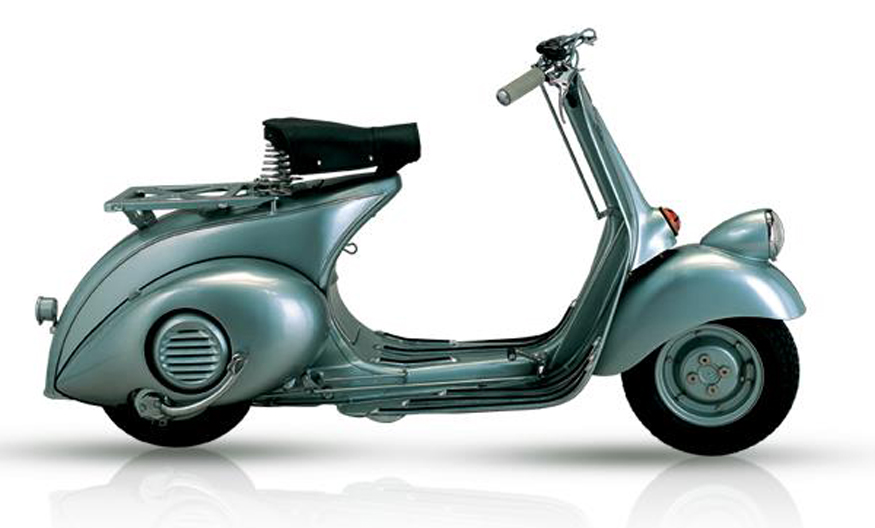
Less than 2500 of the first version were produced, with
sales at first incredibly slow until the company offered
payment by installment. Two years later, an updated
version (Series II, above) with rear suspension was
released, sales soared and what became the Vespa
phenomenon was well and truly underway.
Meanwhile D’Ascanio had continued working on helicopter
designs for Piaggio. However that side of the business
appeared to stall and he moved on to the Agusta group,
which was far more active in aviation. He was credited
with creating the company's first production rotary wing
aircraft.
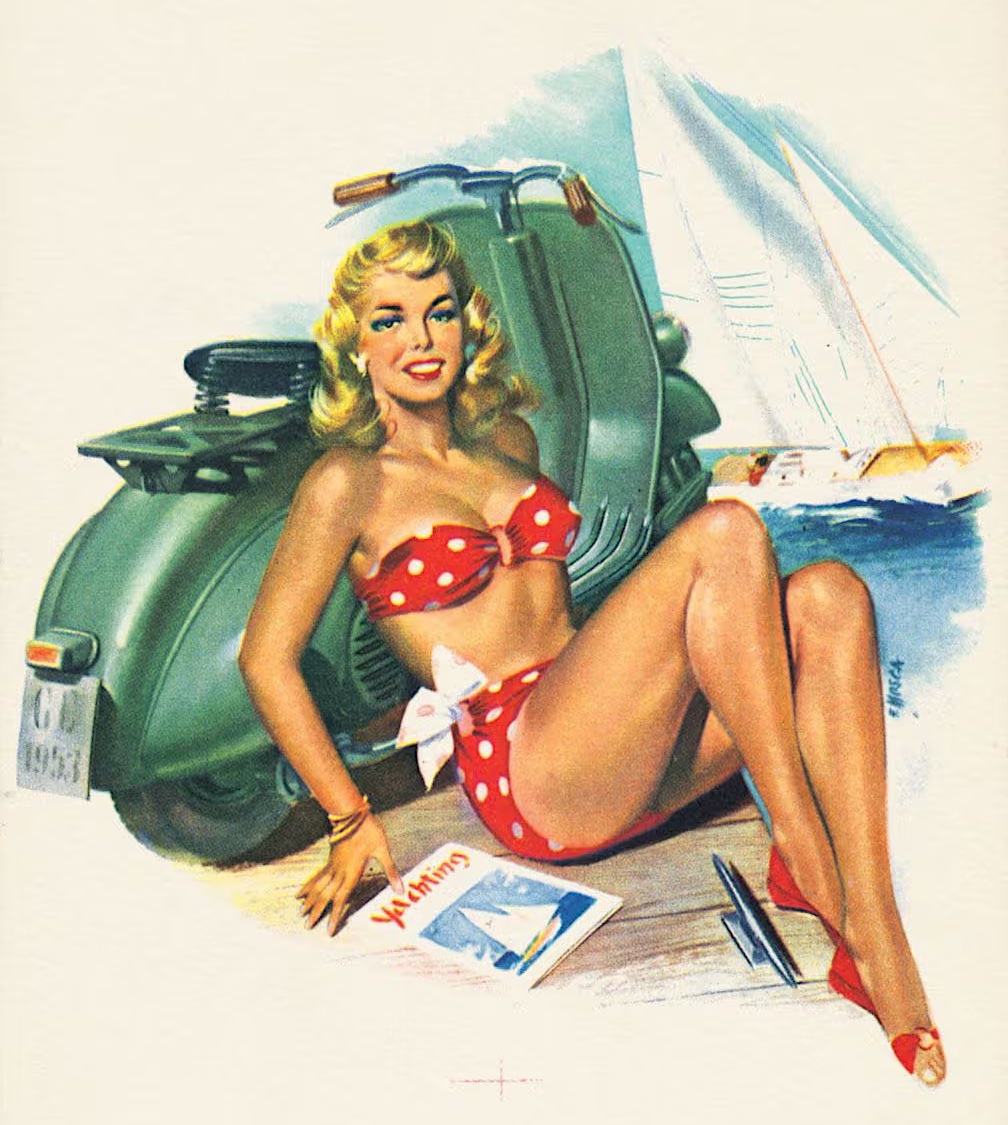
Vespa of course went on to bigger and better things,
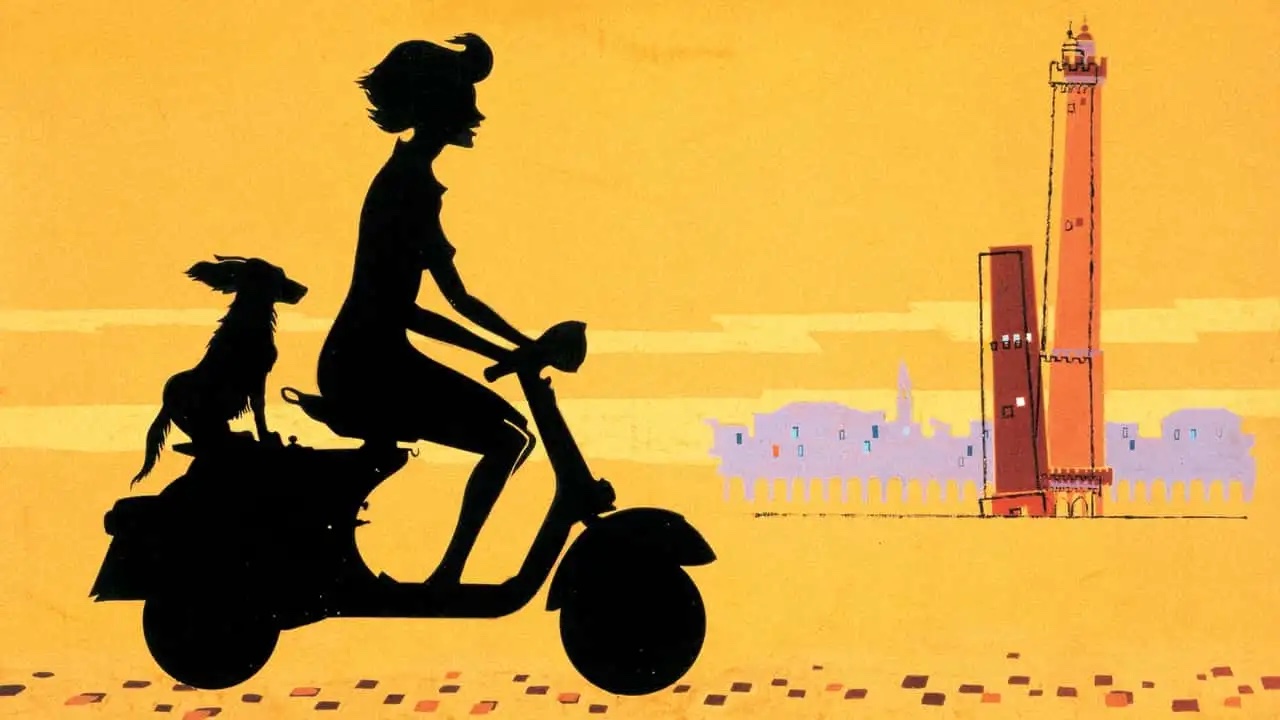
literally becoming a cultural poster child. (Above is a
1950s effort.)
Cycle World in the USA covers some of
the journey, here.
See the marque's 80th anniversary video
***
-------------------------------------------------
Produced by AllMoto abn 61 400 694 722
Privacy: we do not collect cookies or any other data.
Top banner pic by the talented Stuart Grant!




Archives
Contact