
Motorcycle Investor mag
Subscribe
to our free email news
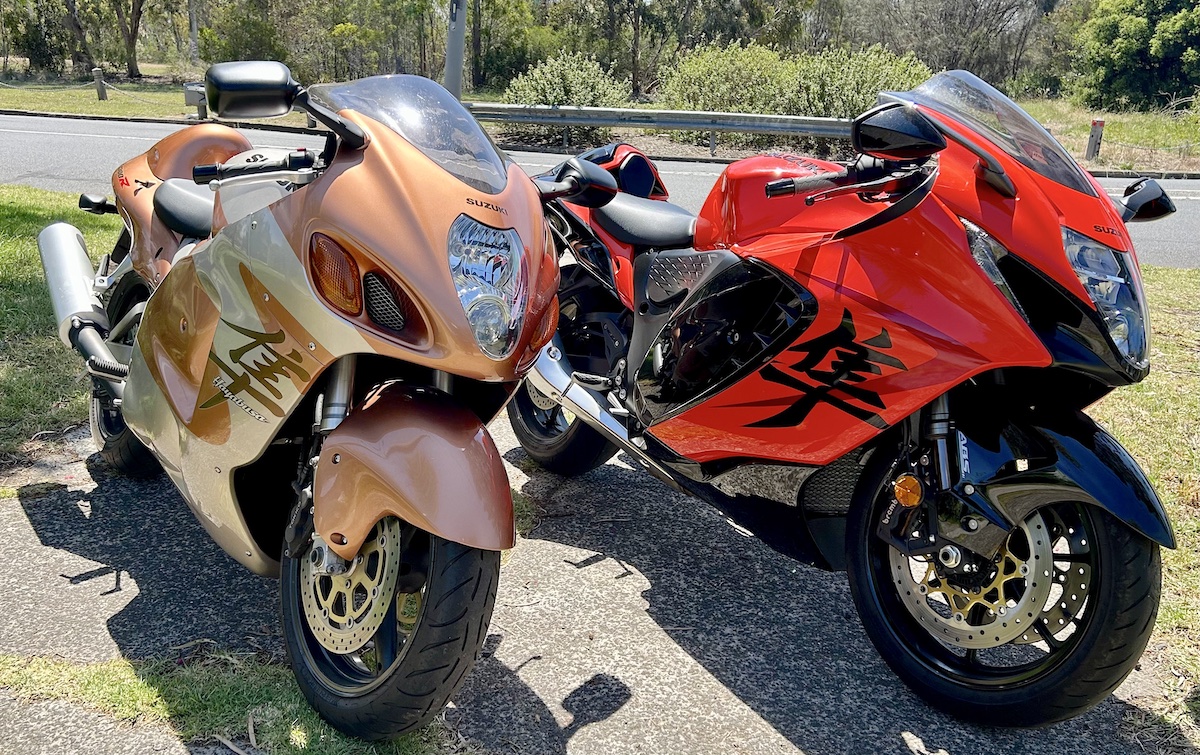
Hayabusa day – Sunday Shed Wrap
Plus a full set
of speed kings on club plates
December 21, 2025 – Guy 'Guido'
Allen
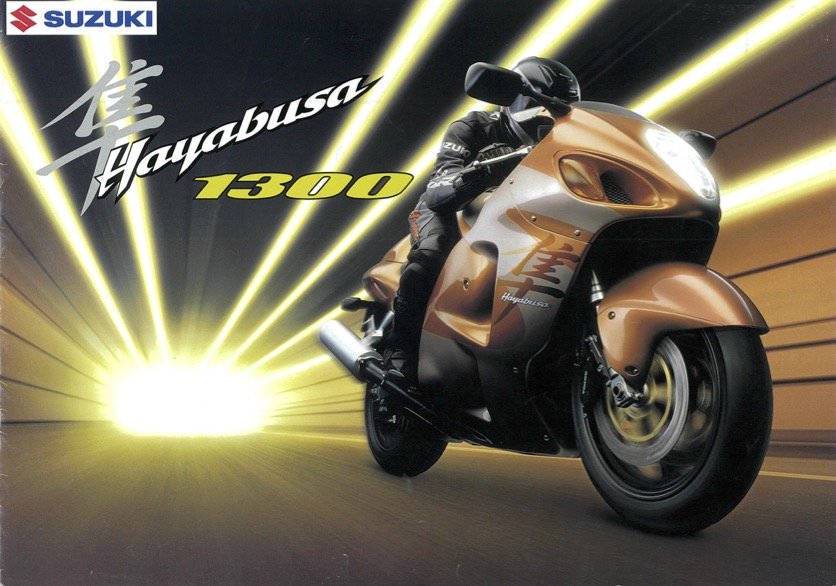
If you think back to 1999, the launch of Suzuki's
first-gen Hayabusa was genuinely shocking. With bold and
for the time confronting organic curves, it looked like it
may have a bad allergic reaction to something. Suzuki
assured us the shape was developed with the aid of a wind
tunnel and knew it was a courageous and risky choice. The
gamble worked, with the model selling well and developing
cult status.
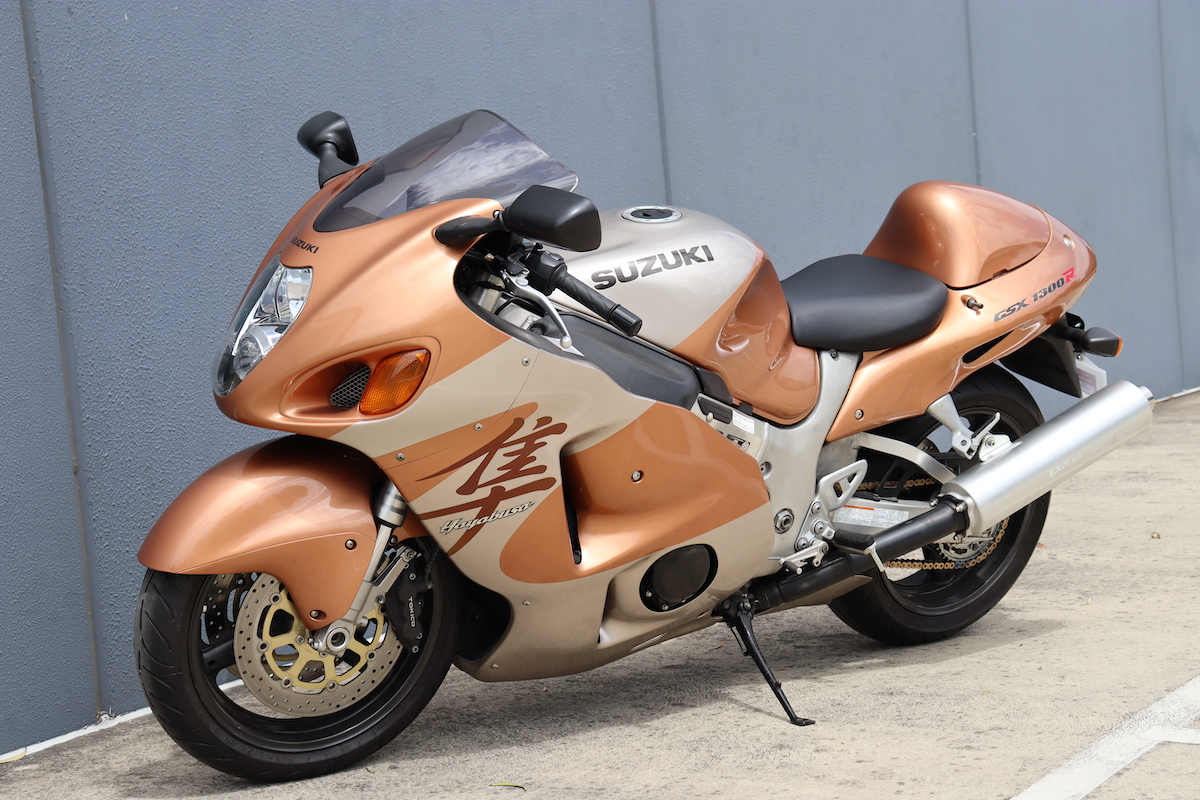
It claimed 185 horses and production bikes typically
broke the 300km/h (186mph) benchmark in top-speed runs.
Despite having what seemed like brutal performance, it was
also reliable and remarkably benign to ride.
So how has it stood the test of time? Pretty well. I'm
fortunate in having a low-mile example in excellent shape,
sold to me by the good Allan Morrison, owner of the of
Fearless Motorcycles workshop in Adelaide. (Look out for
our upcoming profile.)
Assessed in isolation, it's smooth, has formidable
performance, decent suspension and reasonable brakes. The
front units have dual six-piston calipers (the same as
fitted to my ZX-12R) and were good for the time. However a
modern set of four-spotters would easily out-perform them.
Oh, and there's no ABS.
In fact, aside from the fuel injection, it's a
surprisingly analogue experience.
Get a good example and there is no reason why it
shouldn't be a thoroughly delightful ride, so long as
you're comfortable with big heavy sports tourers. And you
need to remind yourself that it's very easy to get in over
your head, as the engine will overwhelm the chassis and
there are no electronic safety nets.
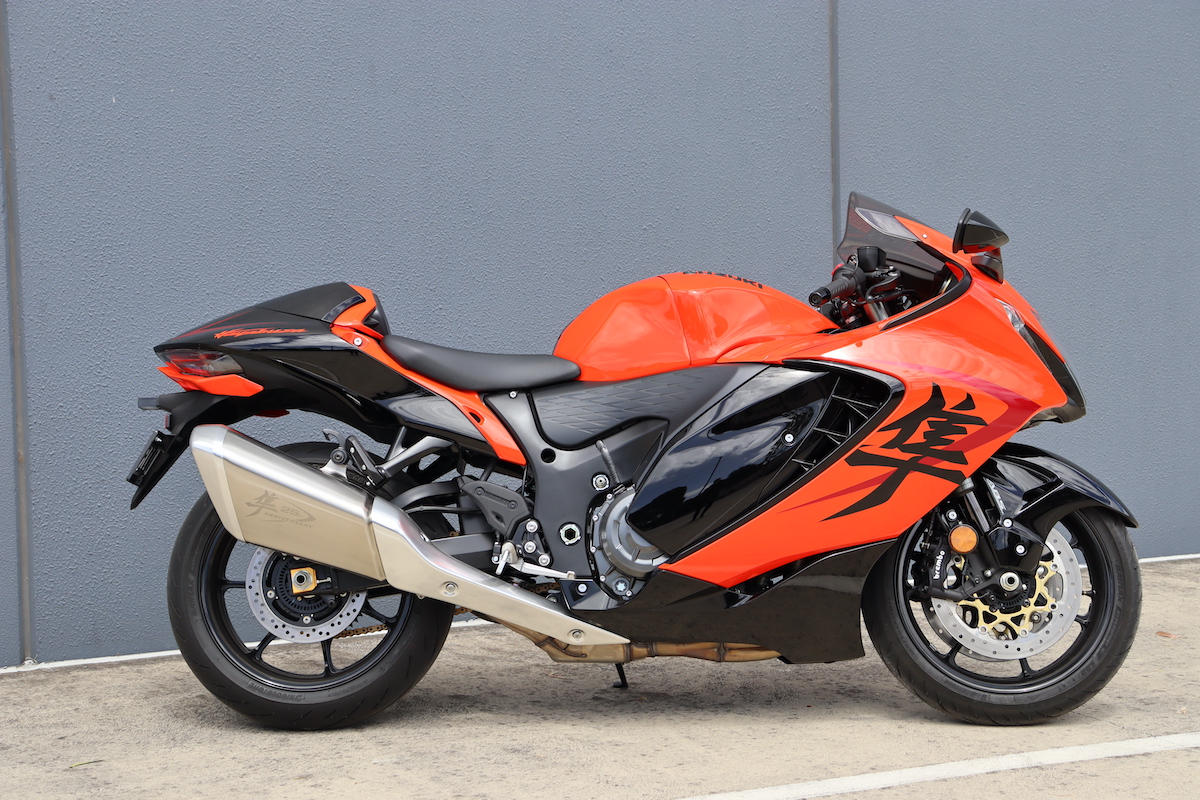
Speaking of which, we now come to the third-gen Hayabusa
in the shed – a 25th anniversary edition. We've moved on a
quarter of a century and now electronics are very much
part of the performance package.
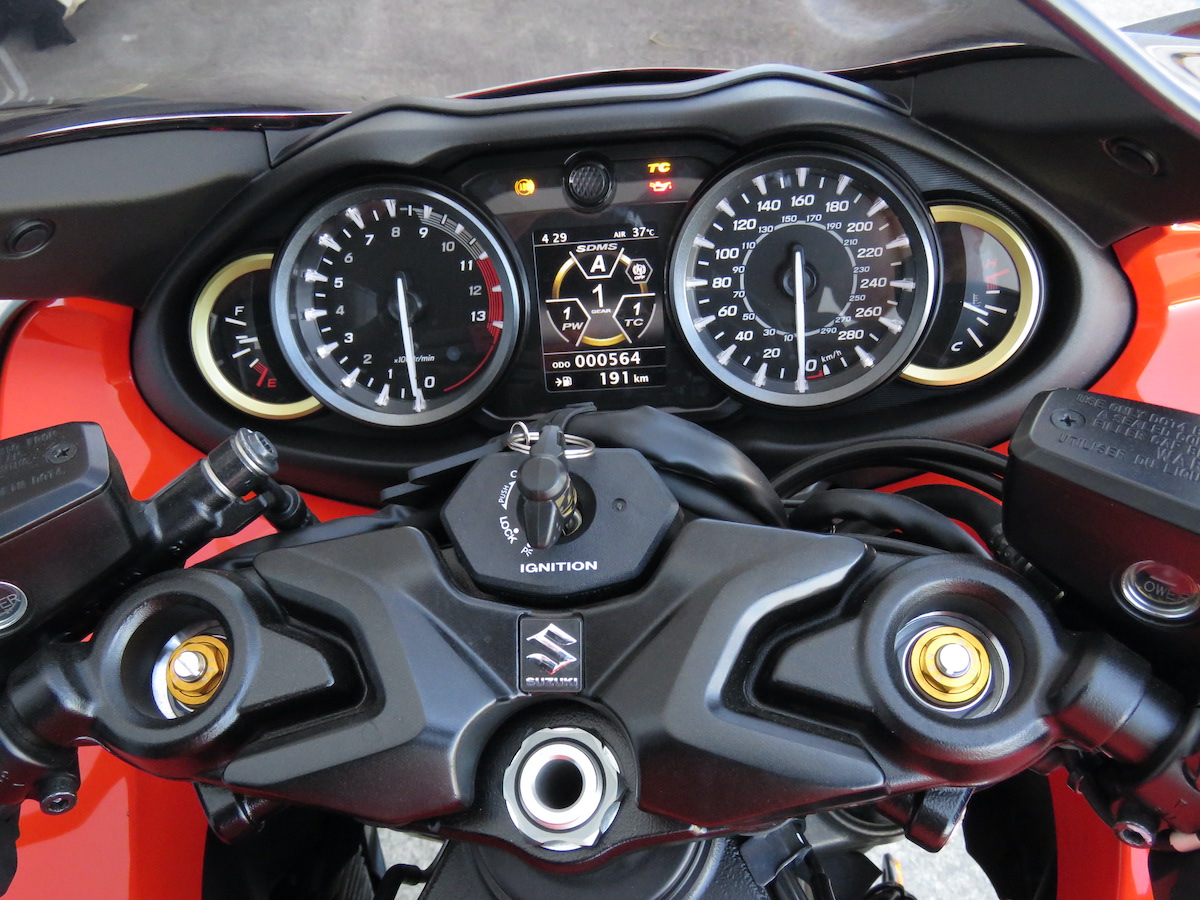
Suzuki wisely presented the third-gen Hayabusa with an
analogue instrument cluster, with an injection of digital
in the centre screen.
The safety net suite is largely driven by a six-axis
inertia measurement unit (IMU – Bosch dominates the
market) which assists with various features such as
traction control, cornering ABS, wheelie control, launch
control, hill-start assist and so-on. Plus, of course,
there is a suite of performance modes, with the ability to
customise a few of your own. A lot to get your head
around, necessitating a thorough read of the owner manual.
Though you can forget all that and just hop on and ride
it, knowing it will be quick and capable.
In the saddle, the new bike feels lower and more compact,
which is deceptive. The seat height is marginally lower
than the first-gen (800mm versus 805), while most of the
other stats are eerily similar. It claims 187 horses, a
little less that the second-gen bikes (195) and perhaps a
mis-step when it came to marketing.
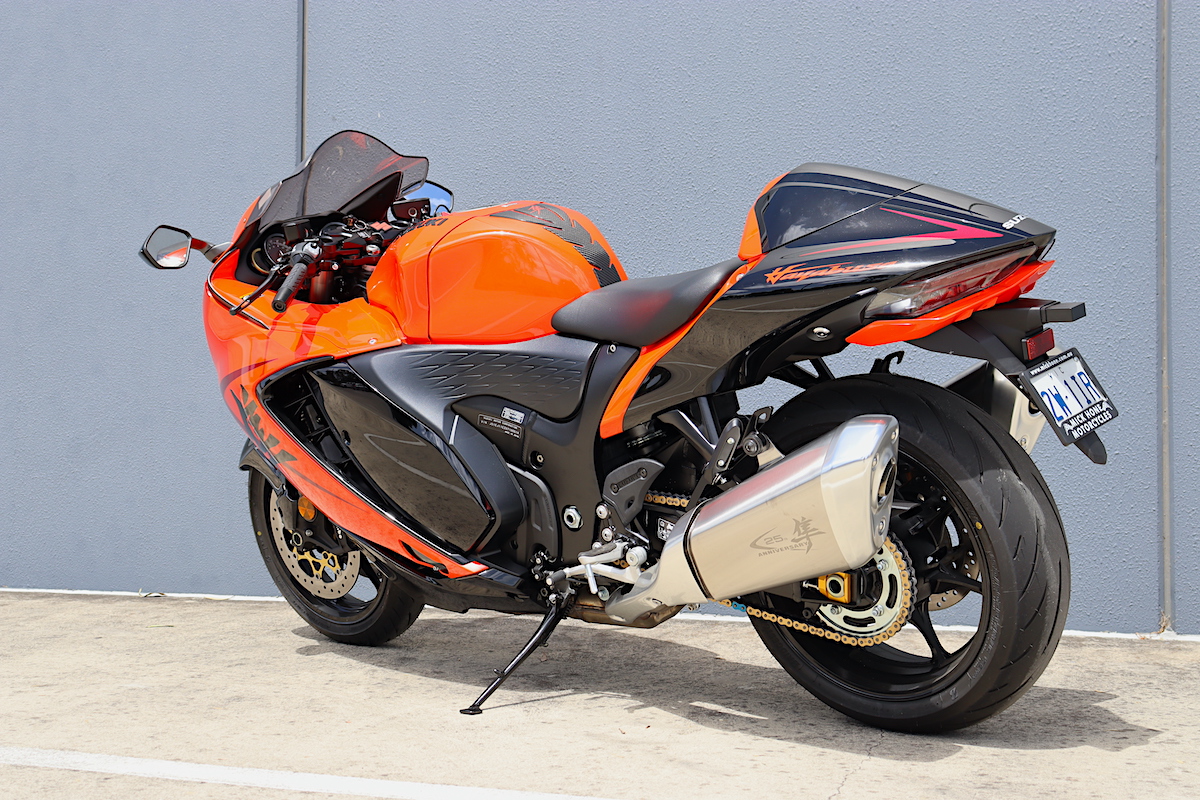
However Suzuki was right in arguing that this is a
quicker machine than either of the first two generations.
It delivers a greater depth of torque pretty much off idle
and through the ranges you might actually use. As for
outright speed, it's been limited to 299km/h (185mph) just
like every Hayabusa since the 2001 model year.
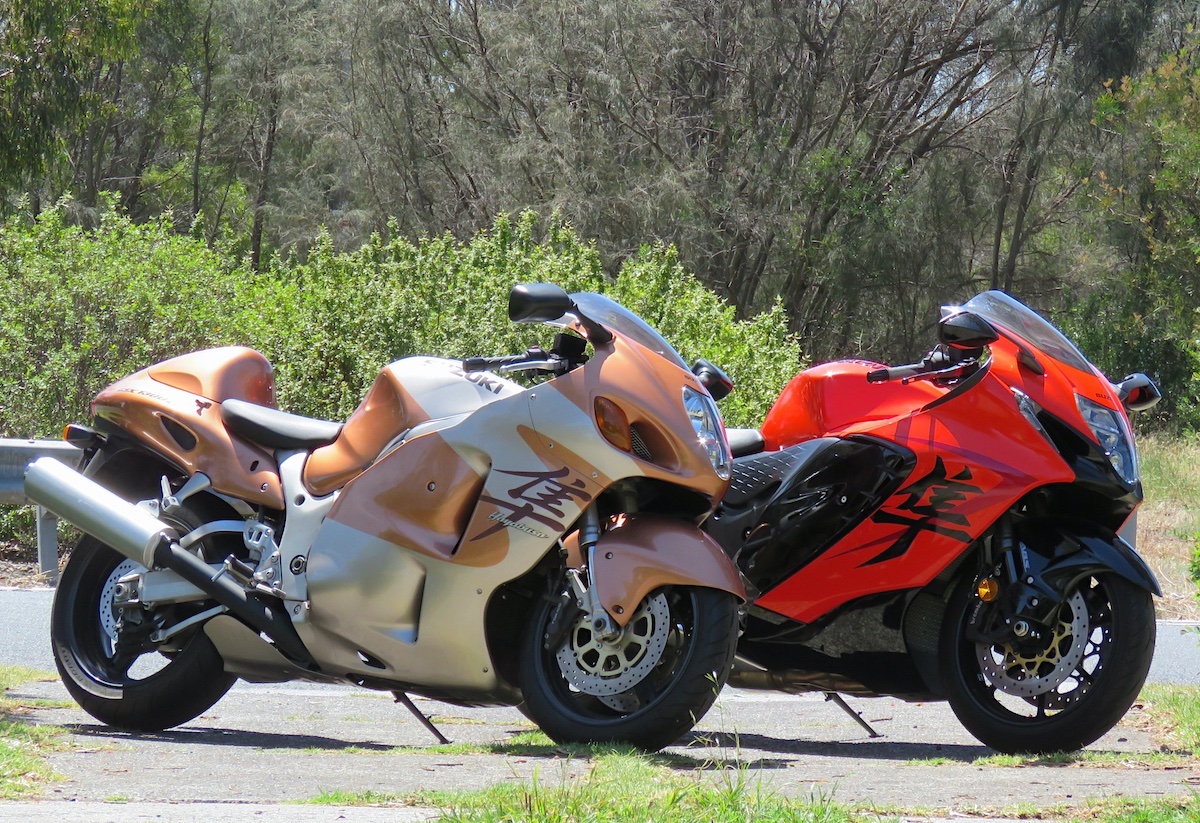
The handling is a couple of steps above the first
generation, while the steering is more precise. Suspension
performance is very good and the brakes are what you would
expect out of a current set-up: sharp, powerful with good
feel.
A bi-directional power-shifter on the six-speed
transmission is standard. I tend not to use it for the
first-to-second change, as it is clunky. It's good from
there, once you get used to changing with the throttle
held open on the upshifts.
I rate the third-generation 'Busa very highly as a ride
and, as you might expect, have little doubt it would be a
quicker machine around a track. It's also a reassuring
beast on the road, thanks to the presence of the
electronic safety nets. You'd have to work hard to screw
it up.
Plus, and I love this, it has cruise control (standard)
and a set of factory heated grips (an upgrade). Very
civilised. There is a bit of 'brute in a suit' going on.
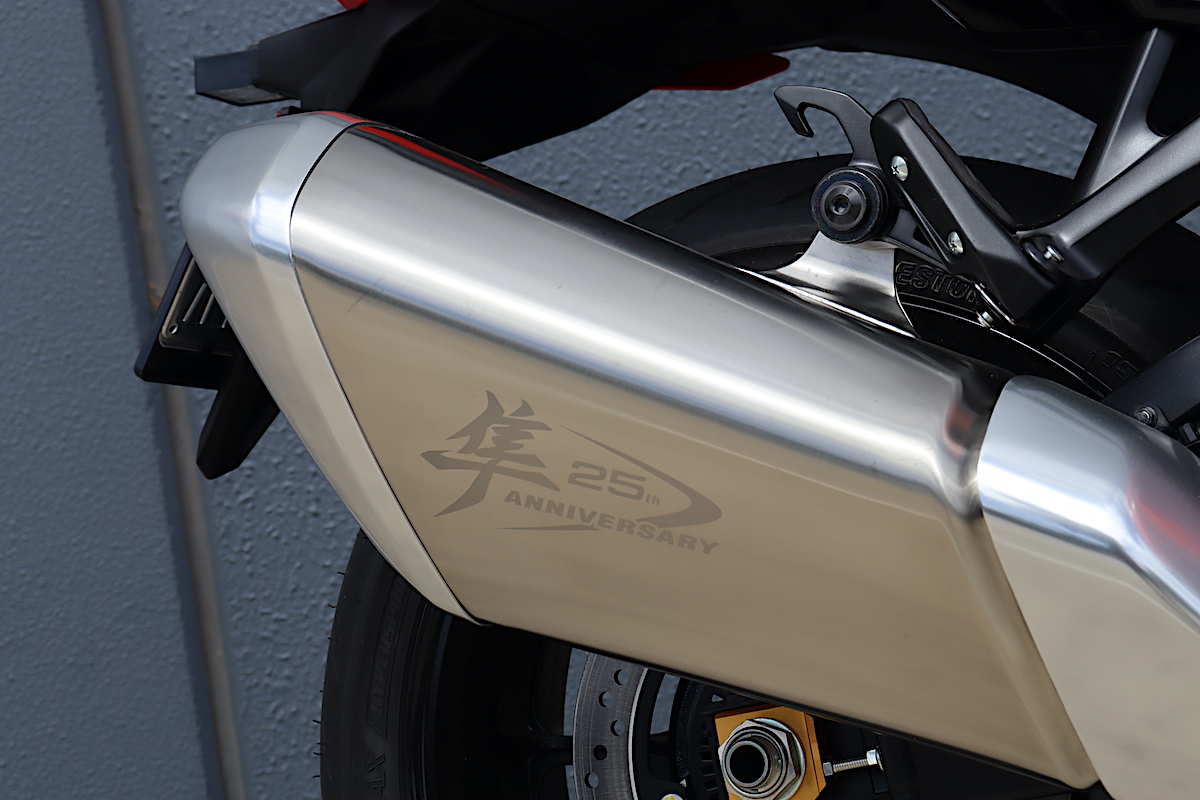
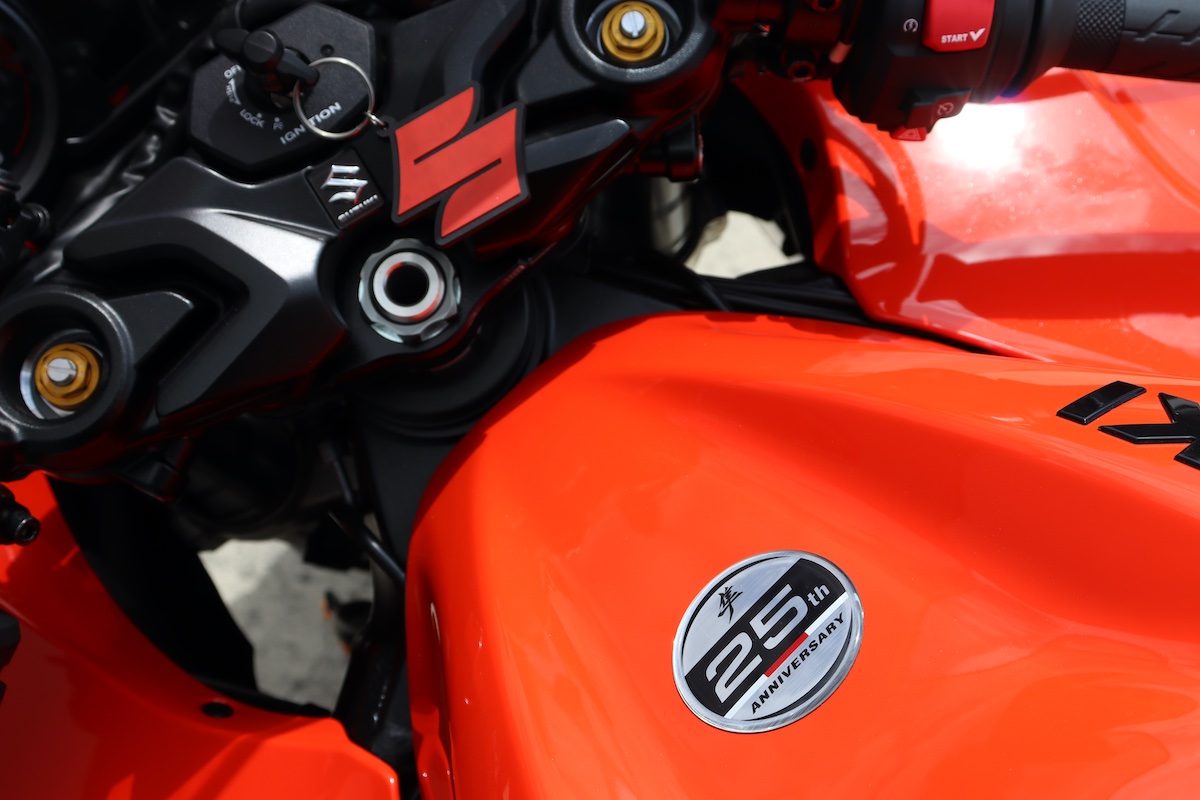
As an anniversary edition, it was delivered just before
Christmas 2023, though it is regarded as a 2024 year
model. Aside from the wonderfully loud paint scheme, which
has a metallic flake running through it, there are lots of
little design 'easter eggs' such as the engraved mufflers,
a badge on the fuel tank and even some engraved links in
the drive chain.
In other news this week, we now have a full trio of late
1990s speed king sports tourers on historic plates in
Victoria. That means much cheaper reg, with occasional
rather than daily use. Who knew we would all live this
long?
They are...
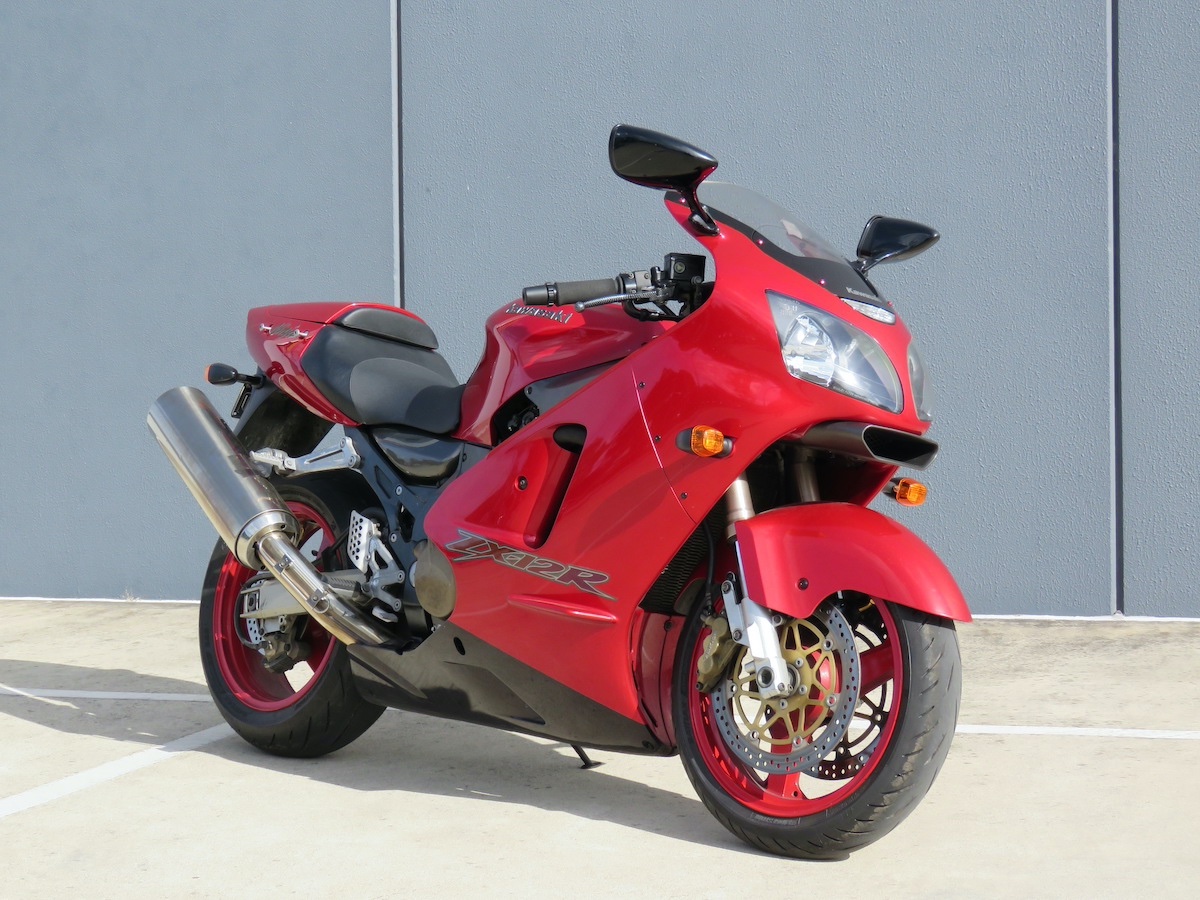
...the year 2000 Kawasaki ZX12-R is our most recent
addition to the historic plate clan, which means it's now
25 years old....
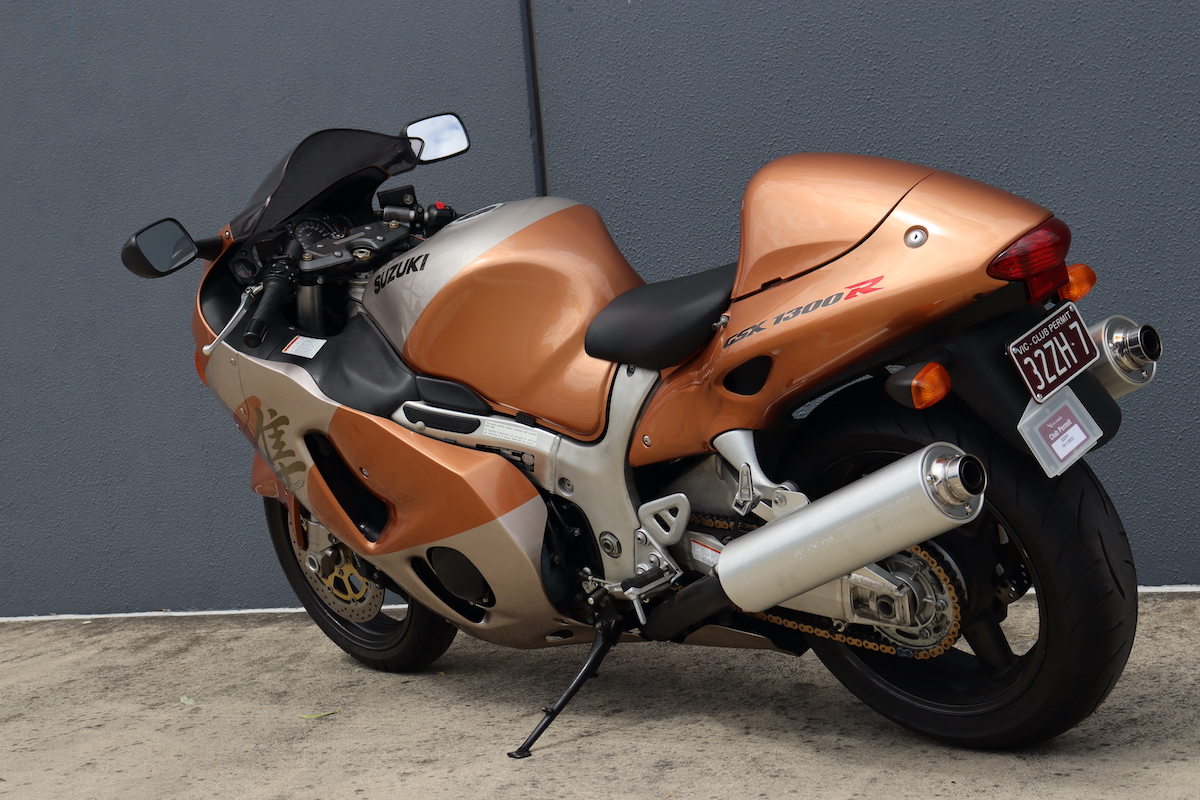
...the 1999 Hayabusa, which went on historic plates last
year...
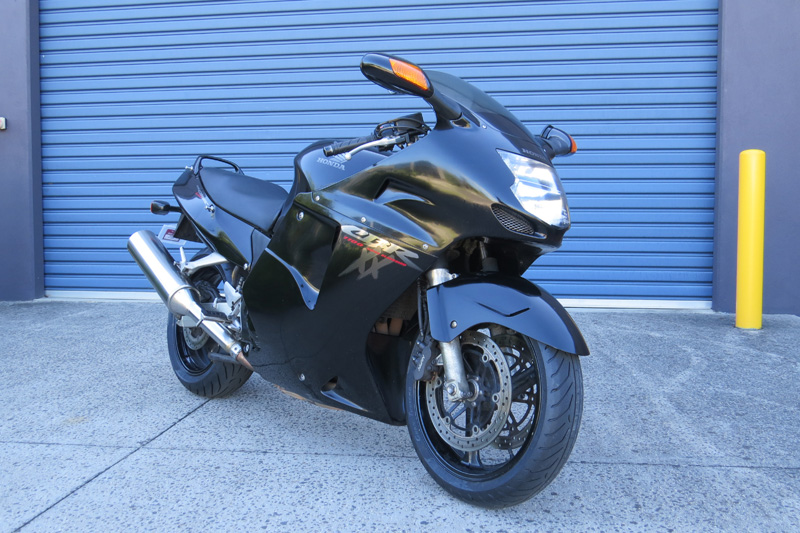
...and of course the 1996 Blackbird, which has been on historic plates for years now!
The whole historic or club plate idea is available
nation-wide, though the rules vary from state to state.
Some work with 25 years as a starting point, others with
30. In any case, it's a wonderful thing...
See our Suzuki
Hayabusa Resources page
And our Honda
CBR1100XX Super Blackbird profile
-------------------------------------------------
Produced by AllMoto abn 61 400 694 722
Privacy: we do not collect cookies or any other data.




Archives
Contact