
Motorcycle Investor mag
Subscribe to our free email news
Super Six
Honda CBX1000
January 2026
Ian Falloon takes a look at Honda's epic six
Oblivion has been the final resting place for most
Japanese motorcycles of the 1970s, but one that escaped
was the Honda CBX. The CBX was always special, and
although only released in 1978, by 1980 there was already
an International CBX Owners Association. Nearly thirty
years on the CBX has become an allegory for Honda.
As a technological innovator, Honda has often pursued an
independent design path, and their quest for dominance on
the race track led to the RC165 six-cylinder 250 in 1964.
It was the six’s triumph that provided the Japanese
company credibility in the occidental, western club that
then owned motorcycling around the world.
But by the mid 1970s Honda motorcycle development was in
the doldrums. The company had become preoccupied with car
manufacture and Honda had lost their performance image.
They needed a knockout motorcycle; the fastest motorcycle
in the world, and one to make everyone gasp. Their
response was the six-cylinder CBX1000.
The CBX project leader was Shoichiro Irimajiri, designer
of the famous racing sixes, and his influence saw the
six-cylinder design prevail over a four-cylinder that was
developed in parallel. The 1047cc in-line six cylinder,
with double overhead camshafts and four valves per
cylinder owed its genesis to the racing sixes, and took
Irimajiri one and a half years to complete.
Its forged crankshaft ran on plain bearings, with a Hy-Vo
primary drive to a jackshaft behind the cylinders running
the alternator and ignition. This helped minimise engine
width, as did chamfered outer crank webs. Although it
looked wide, the engine was only 50mm wider than the
CB750. The inlet manifolds for the six 28mm Keihin CV
carburettors angled to the centre to allow room for the
rider’s knees, and the CBX produced 105 horsepower at
9000rpm, considerably more than another other production
motorcycle in 1978.
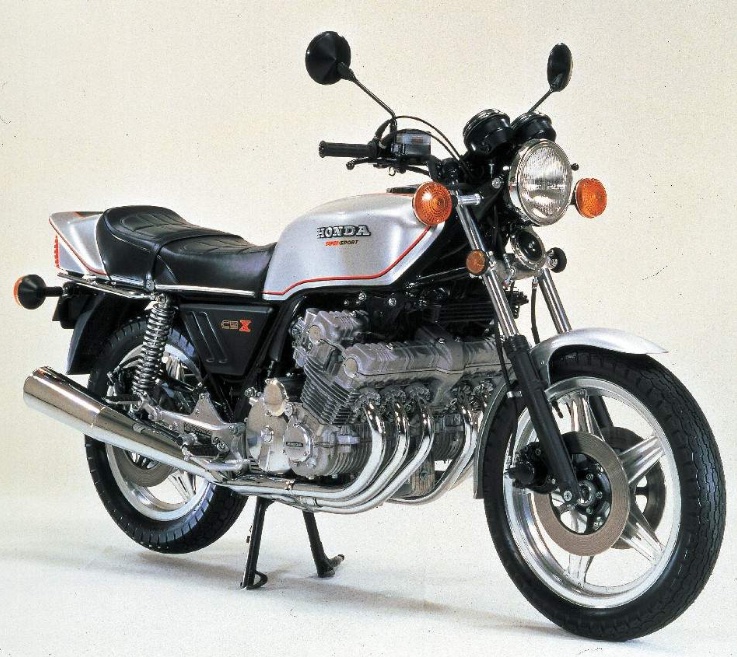
The engine dominated the motorcycle to such an extent
that the chassis was almost secondary. This emphasis on
the engine over the chassis was typical of Japanese
motorcycles of the 1970s but the CBX took this philosophy
to an extreme. The imposing impressive engine hung from a
braced steel frame, with a slender swingarm pivoting in
plastic bushes. The front fork was a spindly 35mm, and the
FVQ shock absorbers faded under hard use. It was no
coincidence they earned the nickname “Fade Very Quickly.”
The braking system was also marginal, with twin 276mm
front discs with floating calipers, and a single 295mm
rear disc. While Irimajiri went to a considerable effort
to reduce weight, including magnesium engine covers, 19
and 18-inch Comstar wheels with aluminium spokes, and
forged aluminium handlebars and footpegs, the dry weight
of the CBX was still a considerable 247 kg.
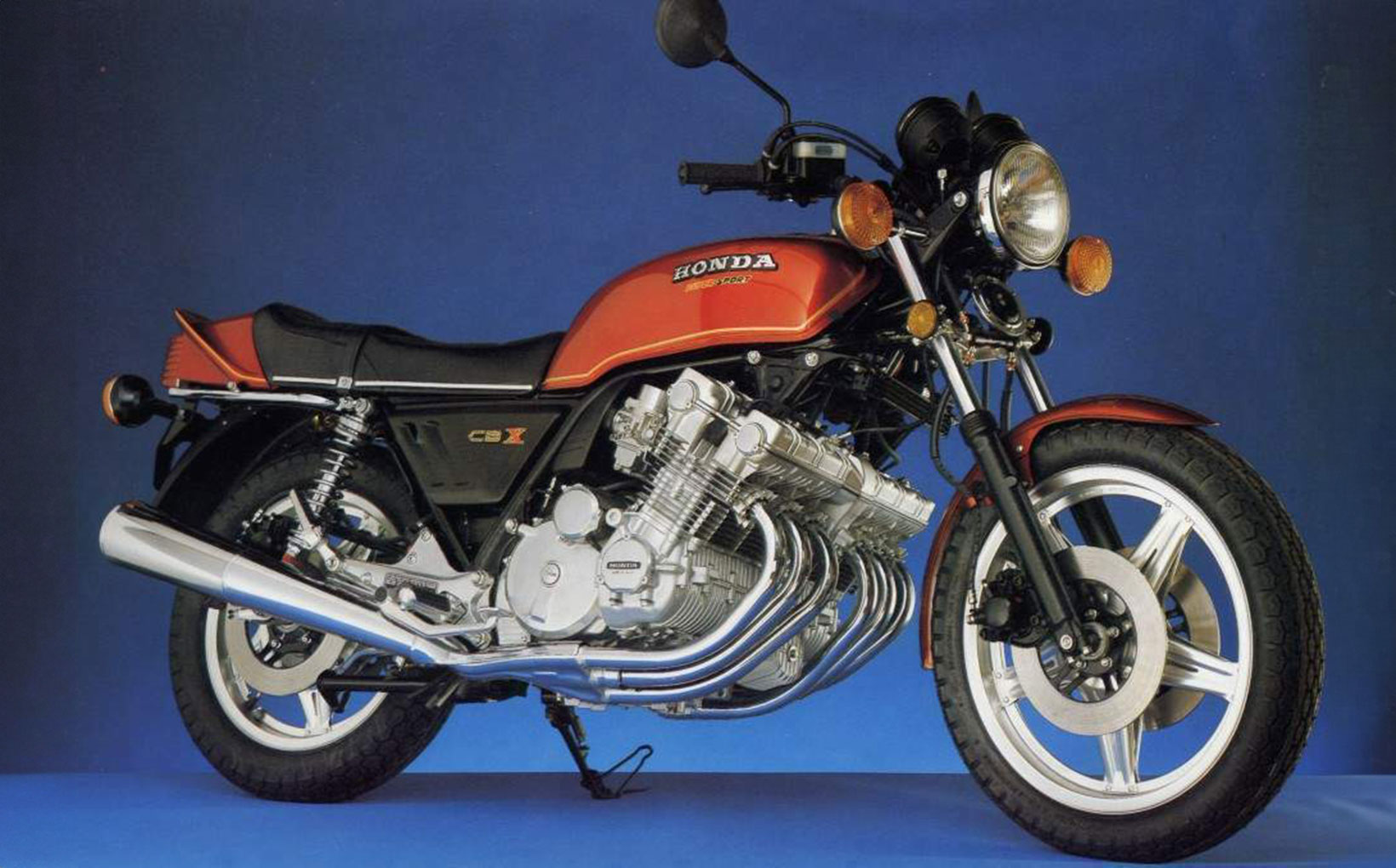
Its styling of was one of Honda’s most successful, the
open cradle frame allowing the motor to dominate. Each
component was carefully chosen to ornament, and exalt, the
six-cylinder masterpiece, and most unique to the CBX,
cleverly scaled up in size to provide the impression of a
smaller motorcycle. The CBX was typically Honda to ride,
the controls were linear, predictable, crisp and precise.
Unfortunately the CBX landed smack in the middle of a
Superbike war. It was fast enough, and powerful enough,
but the power only emphasised its underlying weakness.
Weight, width, and a frame and suspension that was barely
adequate. Some of these handling problems were addressed
for 1980, but lower lift and shorter overlap camshafts saw
the power reduced to 98 horsepower. Now slower but still
heavy, the Superbike crowd continued to shun the CBX.
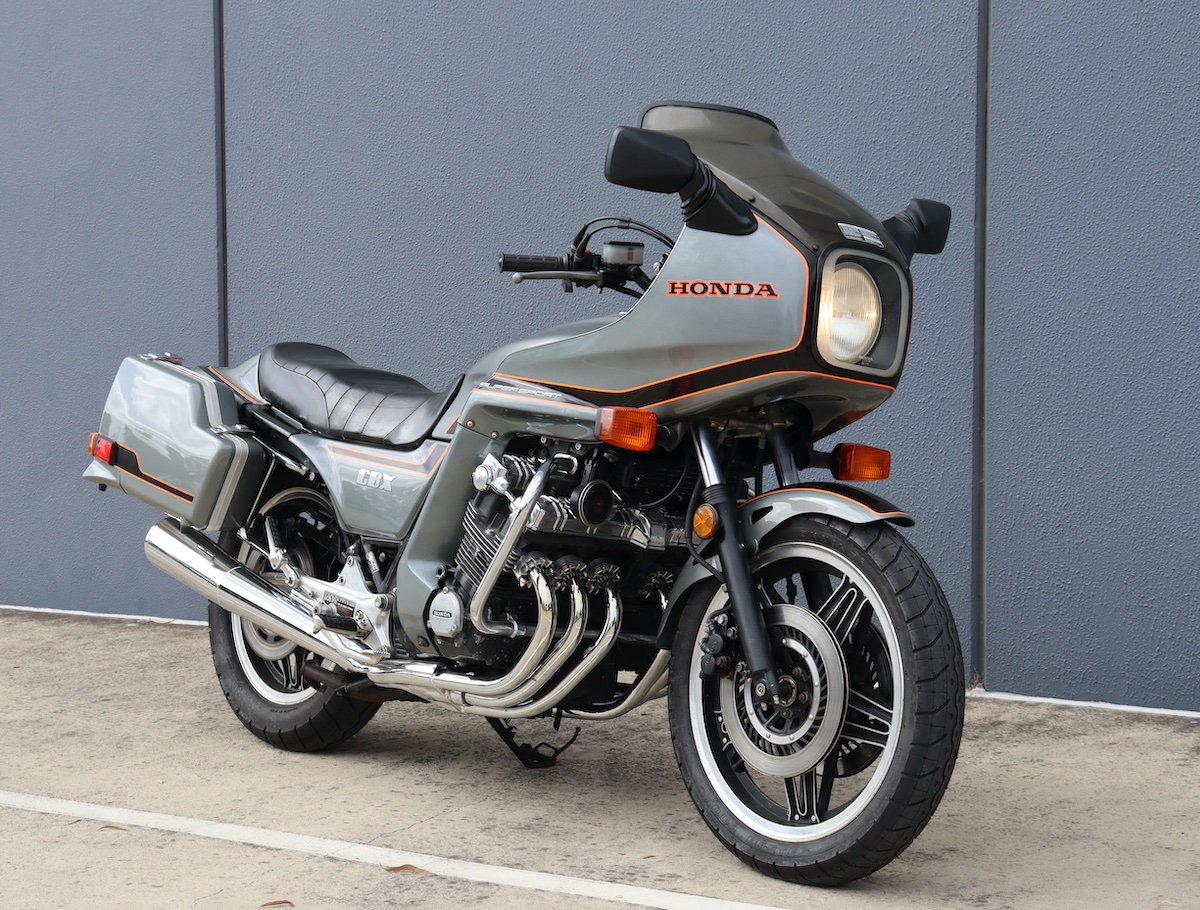
Honda’s own, cheaper, CB900F was almost as fast, and
handled better, so the CBX was refocused, into a sport
tourer for 1981 (above). By 1983 the CBX had no raison
d'être and quietly disappeared.
Unlike many Japanese motorcycles, the original CBX has
enduring appeal. It may not have lived up to expectations
but it was the most stylish six-cylinder motorcycle ever,
and the embodiment of the most aggressive marketing policy
in Honda’s history. Honda didn’t need to build a six, but
their corporate persona required a six for emotional,
rather than engineering reasons. It may have been a sales
disaster for Honda, but it has become a monument to their
capability. As with many classic motorcycles it is now the
first model that is the most coveted. Exuding elegance and
class, the original CBX is one of those rare motorcycles
that will never be forgotten.
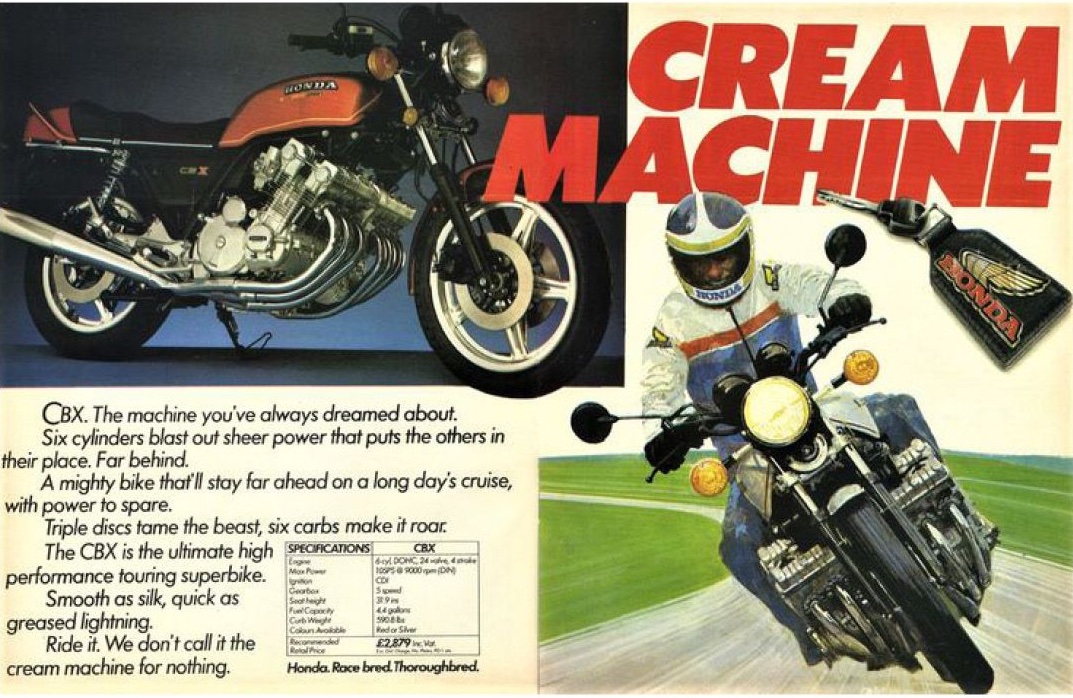
SIX THINGS ABOUT THE CBX AND SHOICHIRO IRIMAJIRI
Shoichiro Irimajiri joined Honda’s R&D department
in1963. His initial project was to extract more power from
the 50cc RC113 twin, raising this to 11.8 horsepower at
21,000rpm.
The lessons learnt from the 50 were then applied to the
five-cylinder 125cc RC147, and the 250cc six. Irimajiri
was attracted to the six because it had perfect primary
balance. He spent most of 1964 designing the six, and saw
it grow into 297cc and become a World Championship winner.
After designing the six Irimajiri was involved with the
V12 1.5-litre RA271 Formula 1 car engine, and when Honda
withdrew from motorcycle GP racing, remained with car
projects until 1975.
With the establishment on a new motorcycle research centre
at Asaka, Irimajiri first headed the CBX1000 project, and
then the ill-fated oval-piston NR500 racer.
The CBX exhaust system was a six-into-two, and during its
development Irimajiri taped the sound of F4 Phantom jet
fighters with the intention of replicating it in the CBX
exhaust system. Although they were successful the Phantom
exhaust was vetoed as Honda didn’t want to build a
motorcycle that sounded like a jet fighter.
Irimajiri became a Honda Director in 1979, and from 1984
to 1988 was Executive Vice-President at Honda’s Maryville,
Ohio Plant in the U.S. Heart problems saw him leave Honda
in 1992, when he took up kiko, a Chinese breathing method.
Irimajiri joined electronic games company Sega in 1993,
and was President from 1998 until his resignation in
2000.
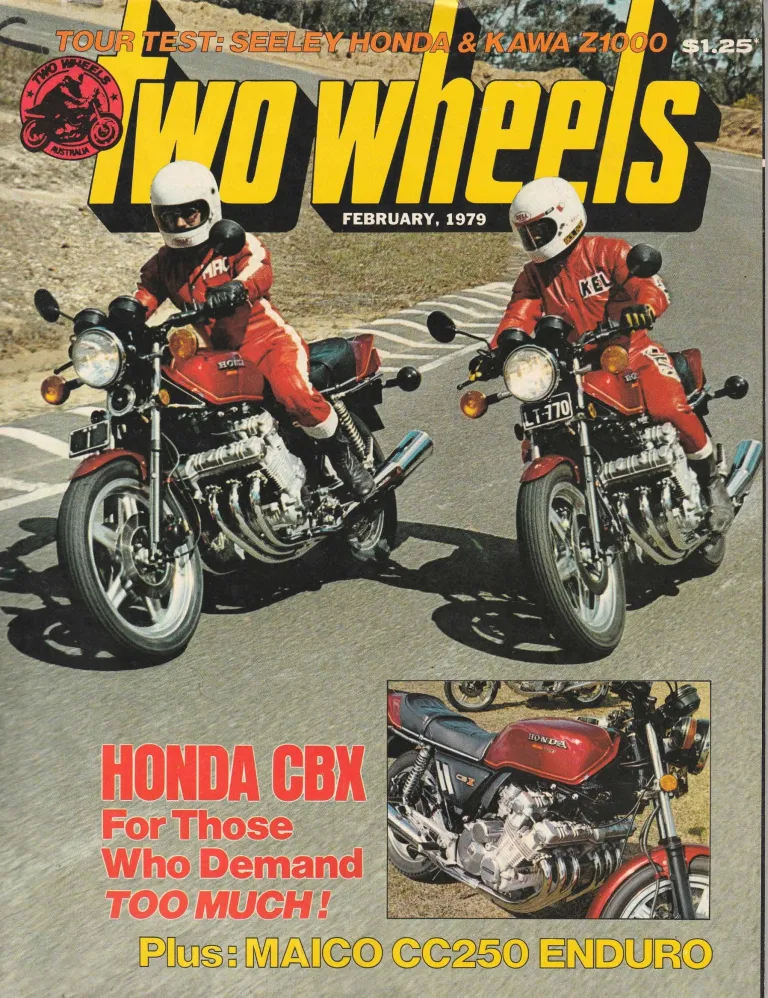
See the Classic
Two Wheels period test
And the CBX1000B
that was in our shed
-------------------------------------------------
Produced by AllMoto abn 61 400 694 722
Privacy: we do not collect cookies or any other data.
Top banner pic by the talented Stuart Grant!




Archives
Contact