
Motorcycle Investor mag
Subscribe to our free email news
Future Collectibles – BMW HP2 series: Enduro, Megamoto, Sport
(September 2020)
Hot Boxers
by Guy 'Guido' Allen
Want something really special in a twin? BMW’s
three-way high-end HP2 series is the place to start
To understand where BMW’s very special HP2 series (and the company that made it) stood in the world of motorcycling at the time of launch, it’s worth considering this quote from Motor Cycle News in the UK, written about the Megamoto version in 2007: “If only BMW made their sportsbikes like this, they’d have the Japanese quaking in their boots; it really is that good.” A few years later (2009 for the 2010 model year), the company responded with the S 1000 RR which more than fulfilled the writer’s wishes.
Up to that point BMW made fast motorcycles, but seriously sharp performance bikes weren’t in the catalogue – something commented on for years by mugs like yours truly.
In fact, prior to 2005 (when the HP2 series first launched with the Enduro), we often looked across at the company’s car range and wondered aloud if or when BMW would start producing two-wheeled monsters of the stature of their M-series automobiles, some of which were just one step back from being supercars.
Across 2005 to 2009 (and later in some markets), we copped three HP2s: the Enduro, the Megamoto and the Sport. All were staggeringly expensive (Au$27,000 plus ORC to over $34,000 locally) and, while they used variants of existing frames and engines from the boxer twin series, were a big departure from what had gone before.
Let’s take a squiz at them individually.

The Enduro
BMW already had a proud history of taking and using big
boxers in ways no big motorcycle should, most notably in
the spectacularly dangerous Paris Dakar events over the
years. The GS production series was effectively trialled
in Euro enduros in the early 1970s, with success. So the
concept was hardly novel.
That said, it’s difficult to defy sheer physics, which say a big rampaging 1200 twin is the not the ideal off-road partner.
What you were presented with was a small-volume (best guess is up to 1000 and probably lower) toy with a lattice steel frame developed from former competition machinery, running a 105-horse (77kW) version of the 1170cc air/oil-cooled four-valve boxer with fuel injection.
That was packaged up with single disc brakes at both ends and a Paralever rear end with an air shock. Most significantly the company’s much-loved Telelever front end was tossed in favour of a more conventional WP upside-down fork. This was the first serious hint of a change of corporate design thinking – that the company was prepared to ditch its love of the quirky to chase performance. It really was a harbinger of what was to come.
The bike also came fitted with ‘outside spoke’ wheels (not for the first time in the marque's history), in other words wire-laced rims with the spokes mounted on the outer edge, that enabled the fitment of tubeless tyres.
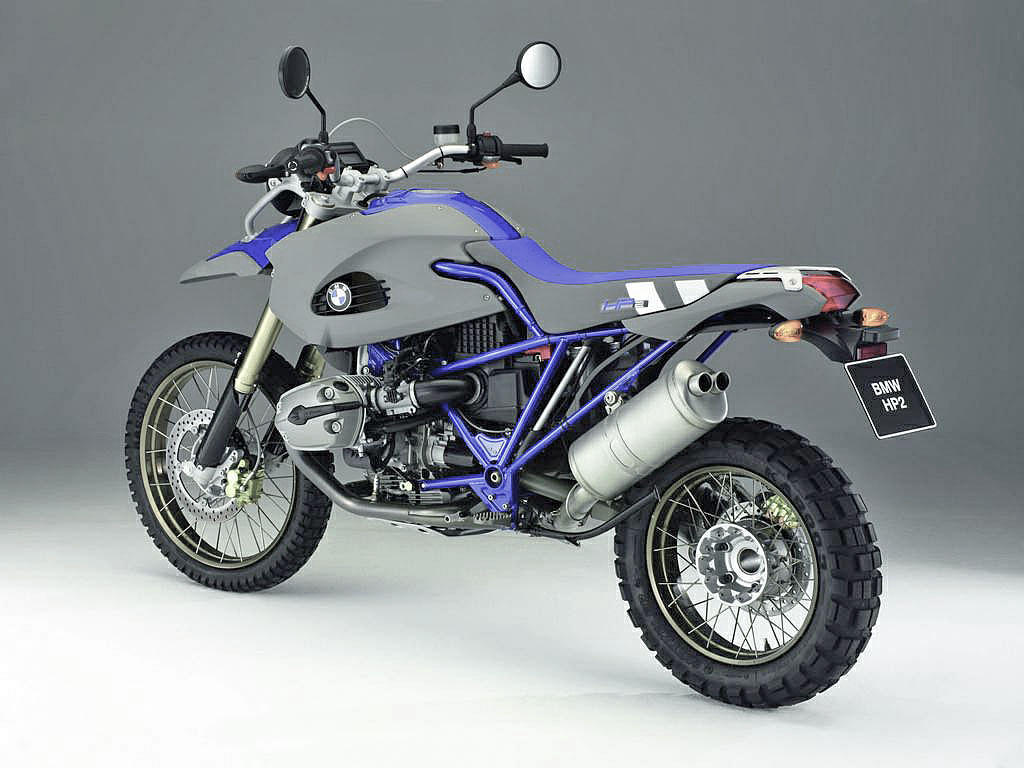
Fuel capacity was kept down to a minimal 13 litres, while
the package weighed in at a commendable (dry) 175kg.
And the result? If you were determined to terrorise the local trails on a big twin, this was the one to do it on.
Though hardly nimble, it carried a bit of bush-bashing armour and was a spectacular weapon in the right hands on a dirt track.
Nevertheless, owners often tended to look at it as a cool motard (once the tyres were switched to something more bitumen-friendly) rather than a dirt tool. Some even went to the extent of having a second set of more road-friendly rims on hand, with something smaller than the stock 21-inch front wheel.
The Megamoto
Take the Enduro, and go for more power, more brakes, and
don’t worry so much about the weight. And lose the pure
dirt bike look. That was the recipe.
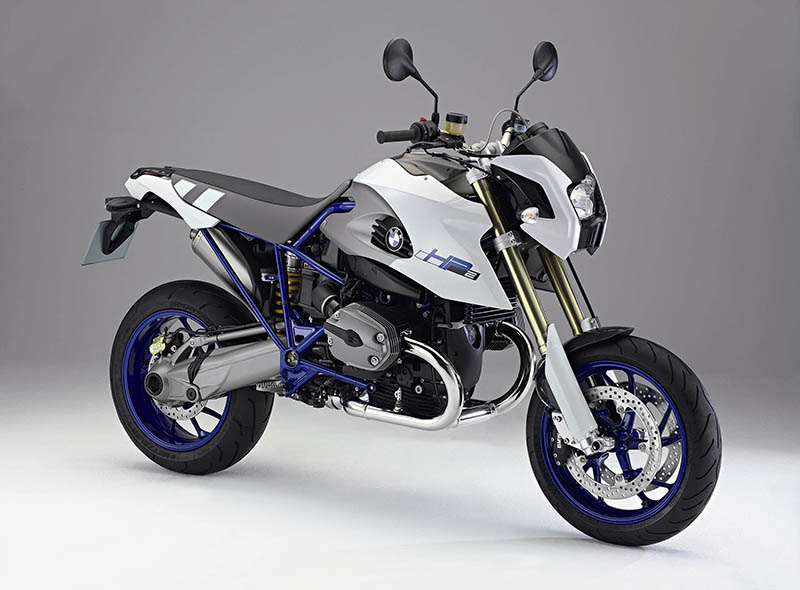
So what happened? The bike looked heavier than it was, with twin four-pot discs up front, a little extra bodywork and more elaborate headlight set to give it more presence. BMW showed admirable restraint by keeping the heft down to a claimed 179kg (four more than the Enduro, and still worlds below a GS).
It also lost the wire wheels in favour of cast alloy, with a more road friendly 17-incher up front.
Gone too was the rear air shock for a straight-forward and premium Ohlins hydraulic/spring unit.
Power was up to near 110 horses (83kW) while the marginal 13-litre fuel capacity had been retained.

Talk to anyone who blagged a ride, myself included, and
you’ll soon discover the factory hit a sweet spot with
this machine. Motards were big in the fashion stakes at
the time, but comfort on many was questionable. This bike
had plenty of urge, handled well, and felt better than the
fuel range would allow, thanks largely to premium and
well-sorted suspension.
The Sport
Here’s gen 3 of the HP2 development cycle. Despite what
some of the online spec databases will tell you, this ran
a significantly upgraded engine, with higher compression
(12.5:1 versus 11:1) and claiming 130 horses (96kW). That,
and the fact it weighed a claimed 178kg dry, made it a
very serious performer. A totally different animal to the
sweet but milder R1100S series it bore a distant
relationship to.
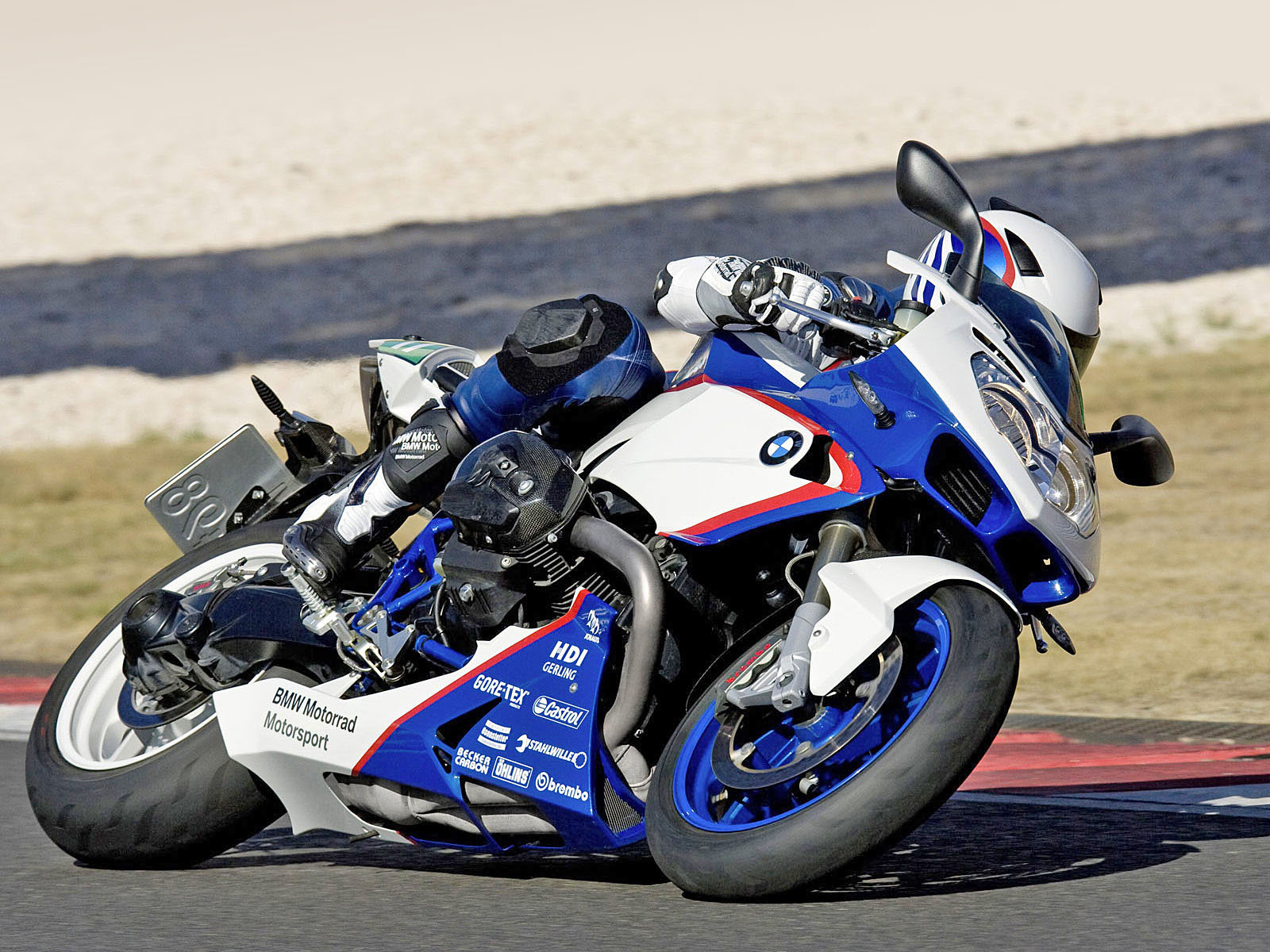
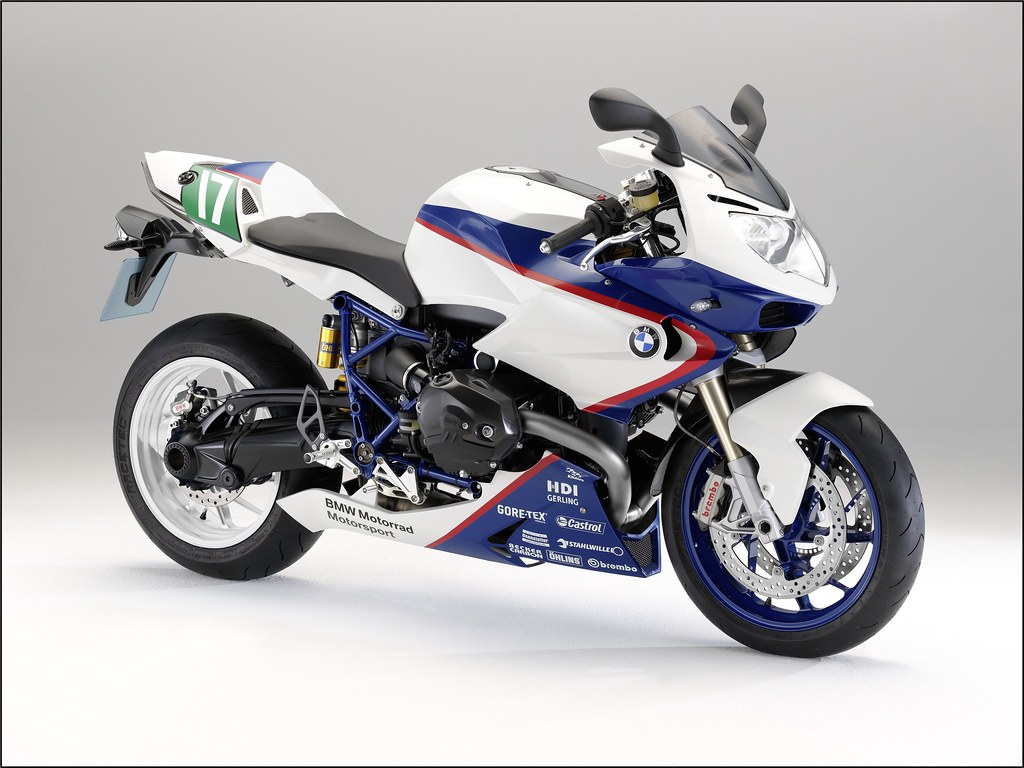
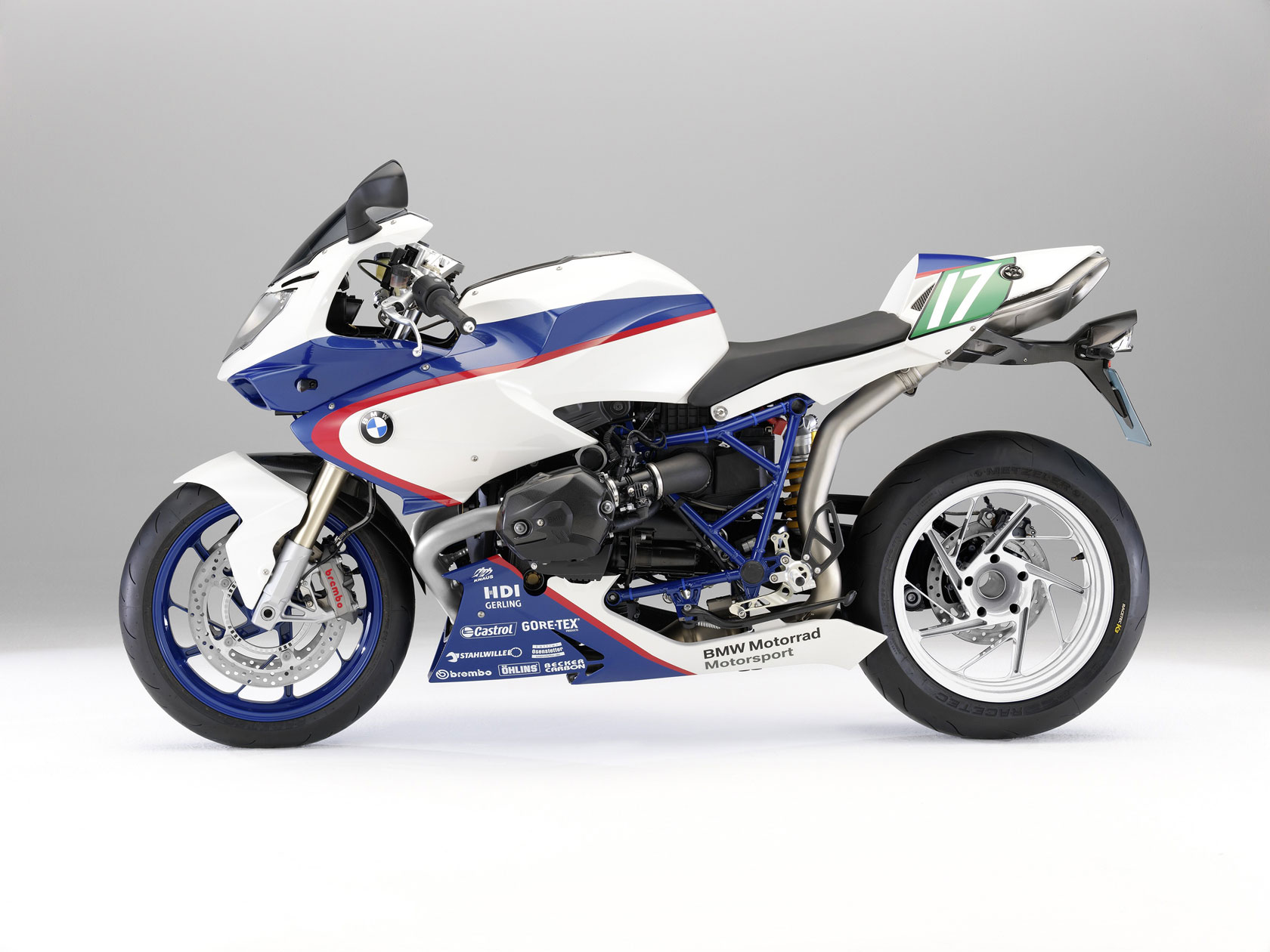
The packaging included much more extensive body work than the previous HP2s, including a fairing split into upper and lower visual sections, which allowed you to see the engine in most of its glory. A two-into-one exhaust theme was kept, but this time exited under the tailpiece.
Under the heading of 'make the buyer feel special' came carbon-fibre tappet covers. Nice.
Behind that powerplant was a well-sorted six-speed trannie, with a quickshifter – very heady stuff for the day.
A digital dash was on board (a weight-saving device),
while fuel capacity had finally been lifted to a more
workable 16 litres.
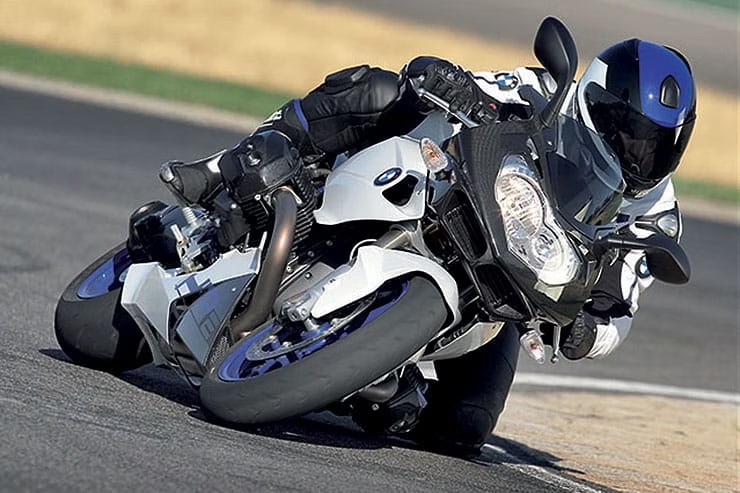
Of course many of the chassis components had been reworked to suit a sports motorcycle, but the company went back to a well-disguised Telelever up front, with Ohlins suspension at both ends. This version was arguably the best-ever iteration of the Telelever.
Braking was handled by radial-mount Brembos which pretty well matched the performance of the rest of the chassis.
Top speed was a whisker under 250km/h. While this wasn’t going to terrify the Japanese sport bike clan – that was the job of the upcoming S 1000 RR – it nevertheless was a very quick and well-mannered machine that could give most other sports twins a serious fright.
For once, people like me stopped bleating about when BMW might build an M-version of its bread-and-butter-motorcycles. This represented the ultimate iteration of a sports boxer twin, and still does today.
As a ride, it was fast and accurate, with a sports seating position – not extreme, but hardly luxurious.

In the market
These bikes were low-volume specials that went well
outside the usual comfort zone for any big manufacturer.
Think of them as the (in car terms) HSV, FPV or, more
accurately, M-series of their kind – something that was
properly developed, but in small numbers at considerable
cost.
Despite the stratospheric asking prices when new, I have a suspicion they were more about corporate image than profit.
Looking at what’s out there, the sales volume fluctuated: so Enduros are the most rare, then Sports, then Megamotos.
If you look at current style trends, the Enduro and Megamoto are the ones to have, as sport bikes are struggling in the market. However (and now is when I show my prejudices) I reckon the ultimate performance package will, long-term, win out as petrol-heads will always invest in bragging rights. So, if it were me, I’d be chasing a Sport. Then again, the full set would be something very special!
Historically, the BMW bike brand sits most comfortably with the Enduro (think Dakar) and then the Sport (think icons like the R69S). In any case, all three variants are rare and special. Whatever your choice, you need to make damn sure all the original bits are on hand and in good condition because replacement parts, particularly cosmetics, will be a headache.
No matter your preference, you’re in for a hell of a
ride.
For/Against
Enduro
Rarity
More assault vehicle than dirt bike
Megamoto
Fast and fun – the pick as a ride
Great ride but minimal connection to BMW history
Sport
Premium Boxer
Fast but not the quickest sports tool out there
(Greg Leech from Info Moto has written a very good piece concentrating on the Sport. See it here.)
SPECS:
BMW HP2 Sport
ENGINE:
TYPE: Air/oil-cooled, four-valves-per-cylinder, boxer
twin
CAPACITY: 1170cc
BORE & STROKE: 101 x 73mm
COMPRESSION RATIO: 12.5:1
FUEL SYSTEM: fuel injection
TRANSMISSION:
TYPE: Six-speed, constant-mesh, with quickshifter
FINAL DRIVE: Paralever shaft
CHASSIS & RUNNING GEAR:
FRAME TYPE: Latttice steel tube
FRONT SUSPENSION: Conventional telescopic fork, 105mm
travel
REAR SUSPENSION: Single shock, 120mm travel
FRONT BRAKE: 320mm discs with four-piston caliper,
optional ABS
REAR BRAKE: 265mm disc with two-piston caliper
DIMENSIONS & CAPACITIES:
DRY WEIGHT: 178kg
SEAT HEIGHT: 830mm
WHEELBASE: 1485mm
FUEL CAPACITY: 16L
WHEELS & TYRES:
FRONT: 17-inch cast alloy with 120/70 ZR17
REAR: 17-inch cast alloy with 190/55 ZR17
PERFORMANCE:
POWER: 96kW @ 8750rpm
TORQUE: 115Nm 6000rpm
TOP SPEED: 249km/h
OTHER STUFF:
PRICE: @ $34,000 + ORC when new
-------------------------------------------------
Produced by AllMoto abn 61 400 694 722
Privacy: we do not collect cookies or any other data.



Archives
Contact