
Motorcycle Investor mag
Subscribe to our free email news
Our bikes - BMW K1 1989
(May 2020, updated August 2021)
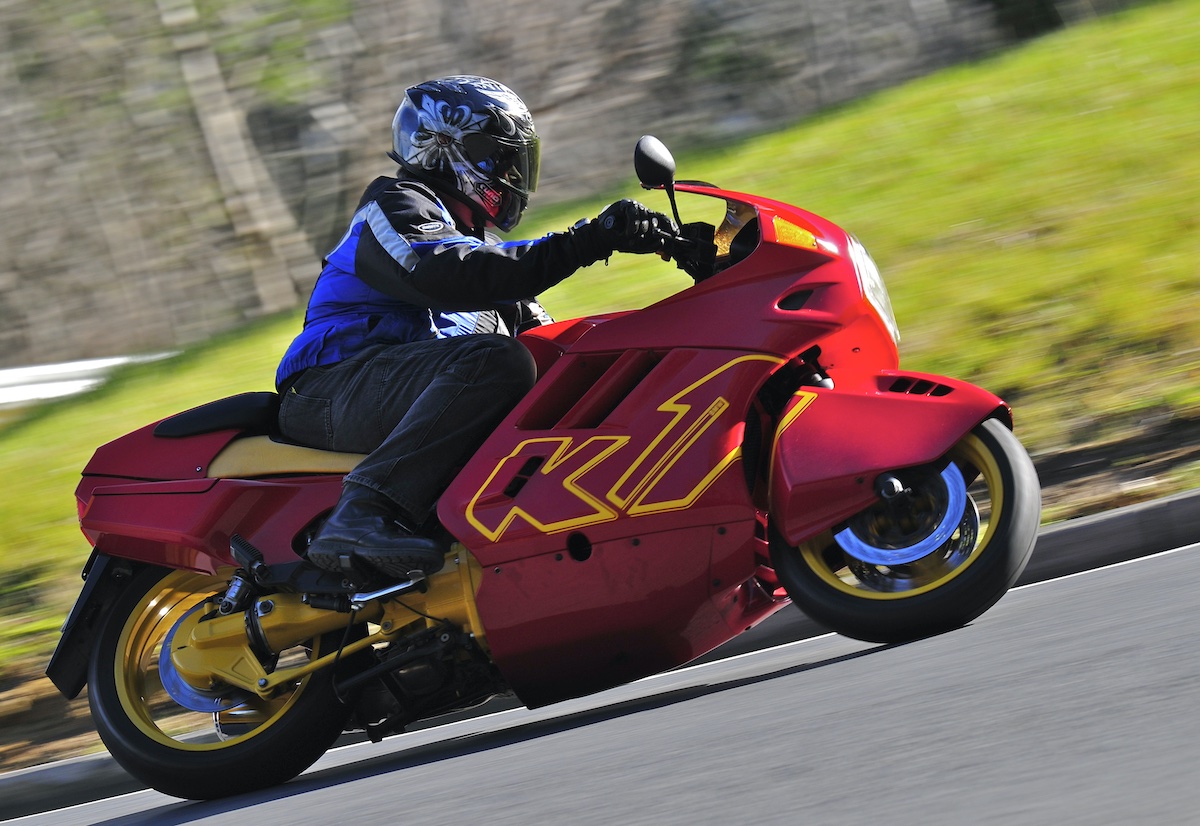
Klaus the K1
by Guy 'Guido' Allen, pics by Stuart Grant
Living with a BMW K1 - the perfect motorcycle for the Devo fan!
Like a lot of people (please tell me I’m not alone here) I have the proverbial ‘bucket list’ of motorcycles I want to own. It’s not so much a bucket list as a liability list. Some items, like a Brough Superior SS100, will never happen. Other more modest goals can be achieved.
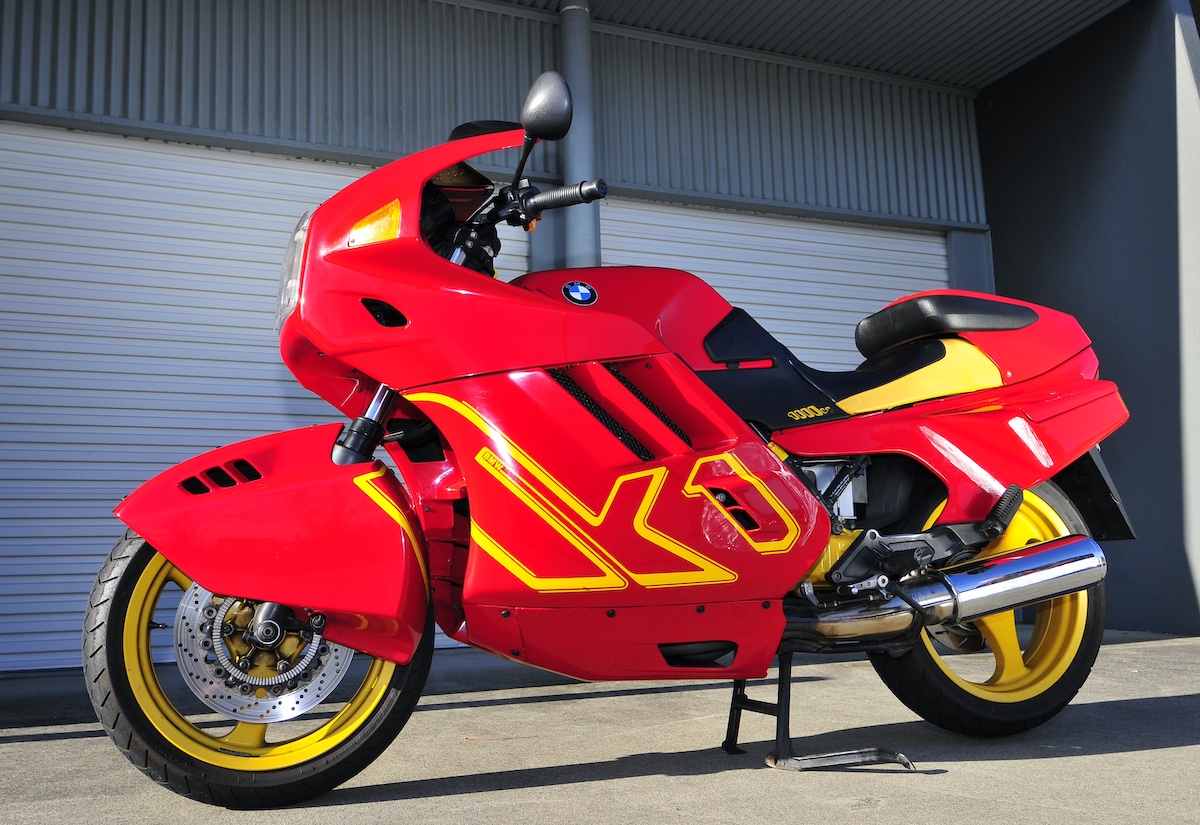
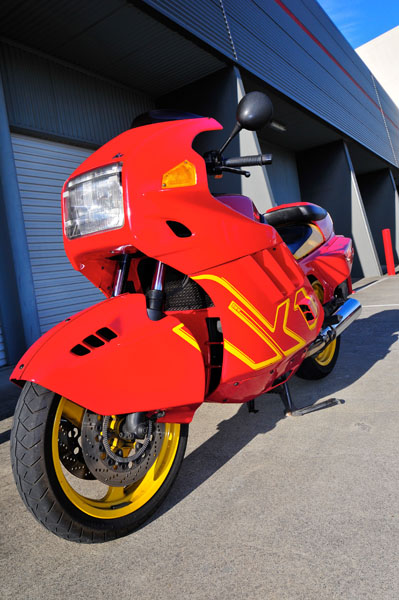
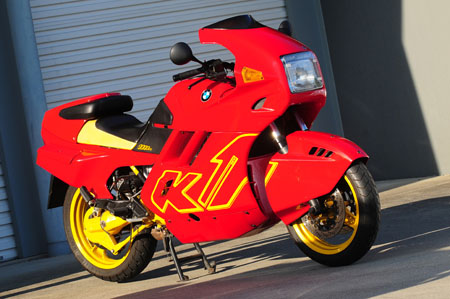
This time it is a BMW K1 of 1989-90 vintage, the marque’s wildly over-eager attempt to finally throw off the famously conservative and much-overstated pipe-and-slippers “I’ve been there too, me lad” touring image.
What we ended up with was the clown fish of motorcycling.
If the movie Finding Nemo was shot for the road,
the K1 would be the star. So, yes, we ended up calling it
Klaus the Clownfish…
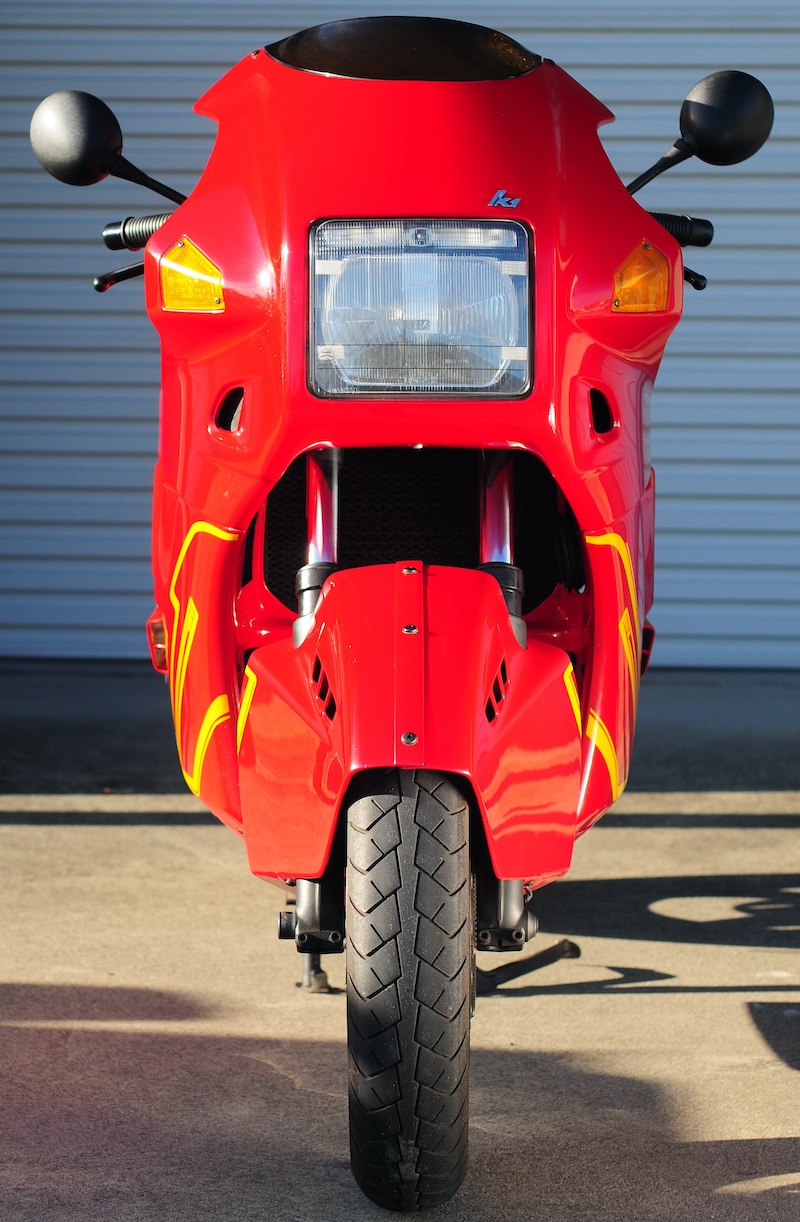
The confronting exterior predated the similarly radical Suzuki Hayabusa’s all-enveloping wind-tunnel-designed bodywork by a decade, and claimed new standards for a low coefficient of drag. A CD of 0.34 with the rider prone meant the company could list a 240km/h top speed with ‘only’ 100 horses.
In 1989, it was priced at over 17 grand (that's Australian dollars), when you could buy a Honda CBR1000F for a shade under 10. Sales were sluggush, and there was a belief that BMW had released the big Kay before it was fully developed.
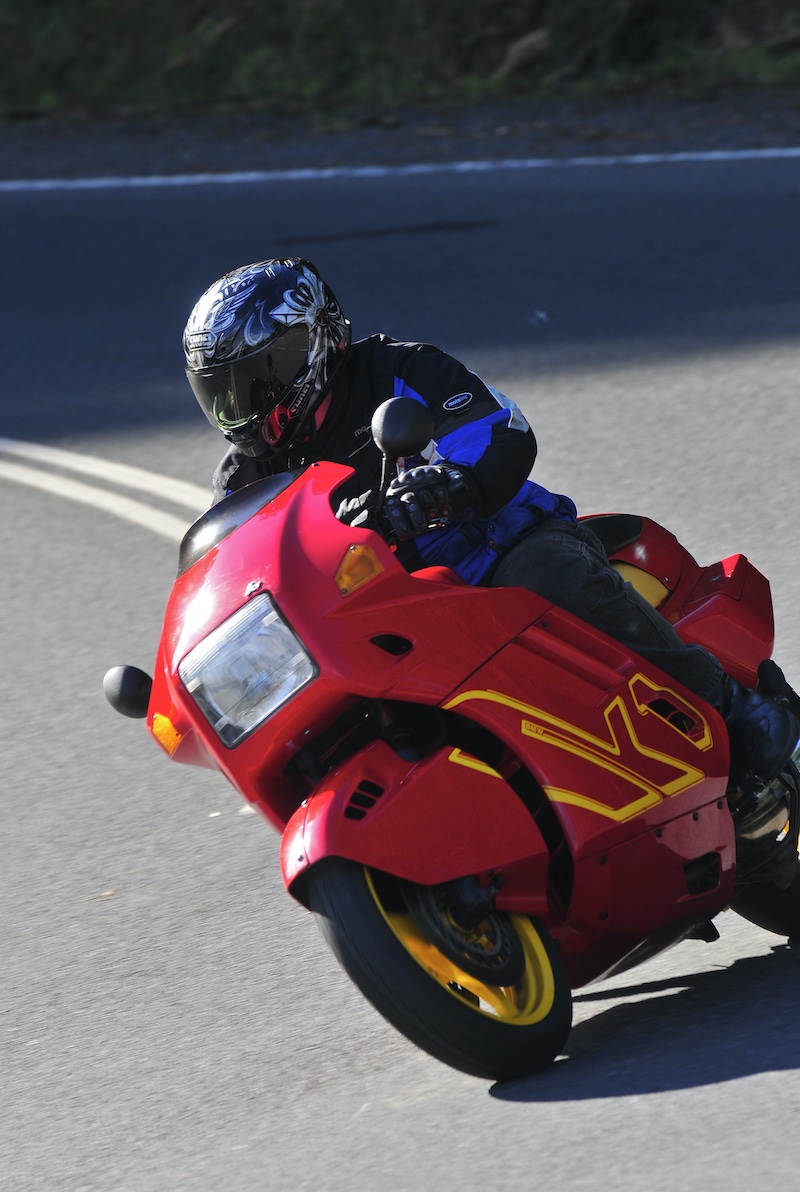
Running improvements were made and the company toned down the wild graphics to the point where it looked much more sensible. What a shame…
CAMO DRAMAS
Back in the here and now, I was innocently casting around
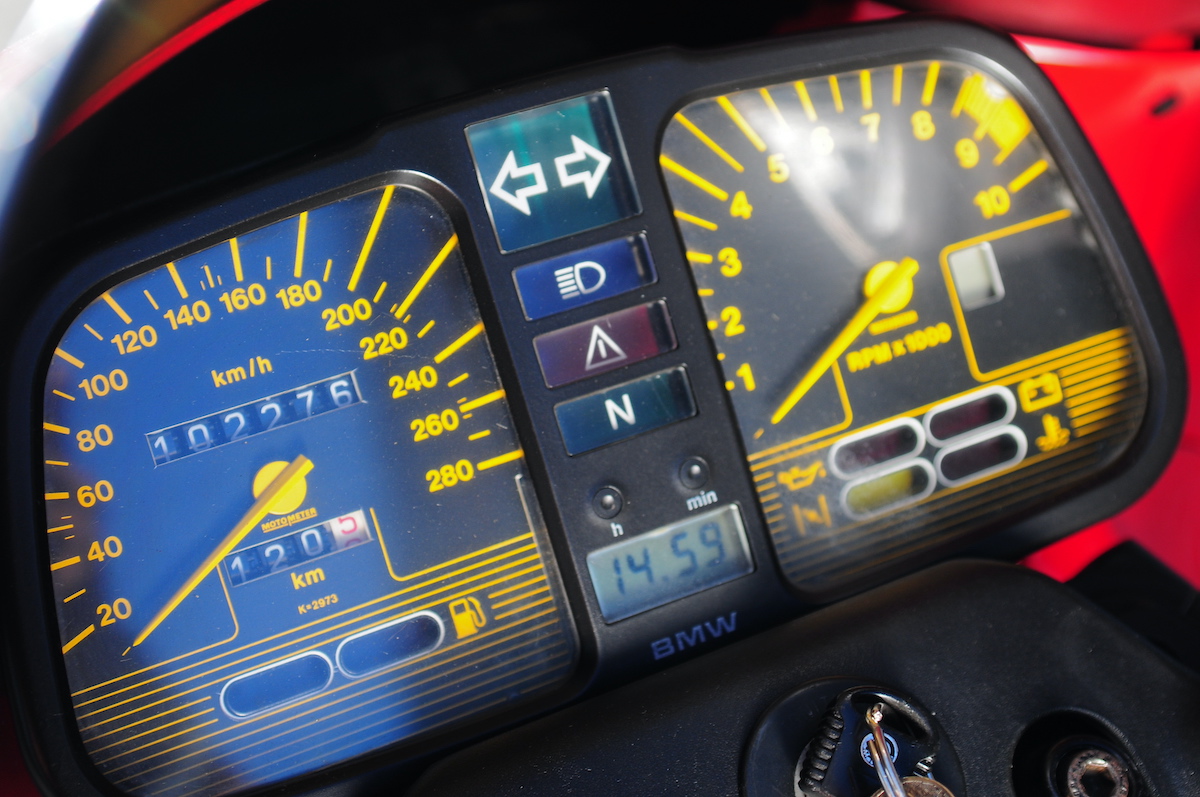
the interweb and spotted the auction for a 101,000km
example that had clearly been cared for. Just as clear was
the owner was grumpy and fed up with feeding fresh
batteries to a bike he was no longer using. Of course if
he’d used the monster, it would have gone through less
batteries, but who are we to criticise?
I’ve had half an eye on these things over the years. They dropped to the low teens a couple of years ago and, with our currently ‘soft’ classic market, were starting to slip under 10.
As usual, I had no shed space and no money. What the hell, put in a bid for $5k (which I knew damn well would never be accepted) and see what happened. Well, coat me in swarf and throw me to the engineers, it came in at $4960!
It was the “you are the successful bidder” email that got my full attention. That wasn’t supposed to happen.
Now we need to explain it to partner Ms M senior. I just might have kept something painted black quiet for a while. Not this. Bright red and yellow have yet to catch on as a camouflage combo.
So I appealed to the Motorcycle Trader magazine
brains trust for assistance. Here’s what I got:
– Ed Snag thanked me for providing entertainment for the
rest of the crew, particularly at a time when TV was so
lacking;
– Blackadder declared eternal love for providing a
parallel reality to his own, which was so much fun that he
went out and bought a bike too;
– Spannerman abused me for not consulting him first, but
added the engines are good for 350,000km and, by the way,
could he have a ride? At midnight, as he doesn’t want to
be seen on something so lairy.
You’ll note that none of this assists in saving my marriage.
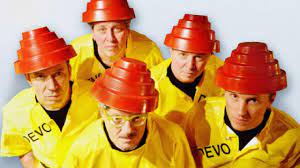
Nor did my then colleague, young Hugues, the video producer. When confronted with a pic of the Kay, he dryly opined, “I didn’t know Kraftwerk did bikes.” He was on to something. Electronic musos Kraftwerk might have had a hand in it – well, if not, they would have approved. For me, however, it was more Devo (above) than Kraftwerk.
Me, I’m more of a Devo fan, and reckon one of their bright red ziggurat hats would be the perfect headwear on a bike like this.
BIG IDEAS
So what’s it like? My recollection of riding a factory
demo years ago was as a slow-steering monster that gobbled
up the miles when you could find the room to cut it loose.

It was BMW’s ‘big ideas’ flagship. The all-enveloping bodywork was a bold move, and backed up with a lot of new features for the brand.
Ian Falloon notes in his book on the complete BMW range (see 'Resources', below): "Emulating the classic R90S, BMW's first Superbike, the K1 continued an aerodynamic path initiated with Ernst Henne's record-breaking Kompressor of 1937. Following the release of the K100, stylist Karl-Heinz Abe created a sports machine called 'racer', for the Time Motion exhibition of 1984. This model inspired the prototype K1..."
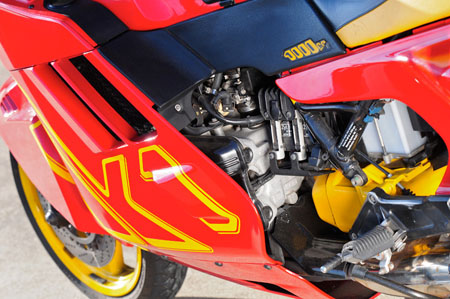
The 16-valve head was an important shift that quickly
rolled out to the rest of the K range, backed by a new
engine management system and plumbed into a catalytic
converter. It was running a high 11:1 compression ratio
and produced torque earlier and stronger than its
eight-valve predecessors. The relatively low horsepower
was controversial, but BMW (and others) believed the EC
(later the EU) might legislate to restrict motorcycle
performance – this was seen as a way to head that off.
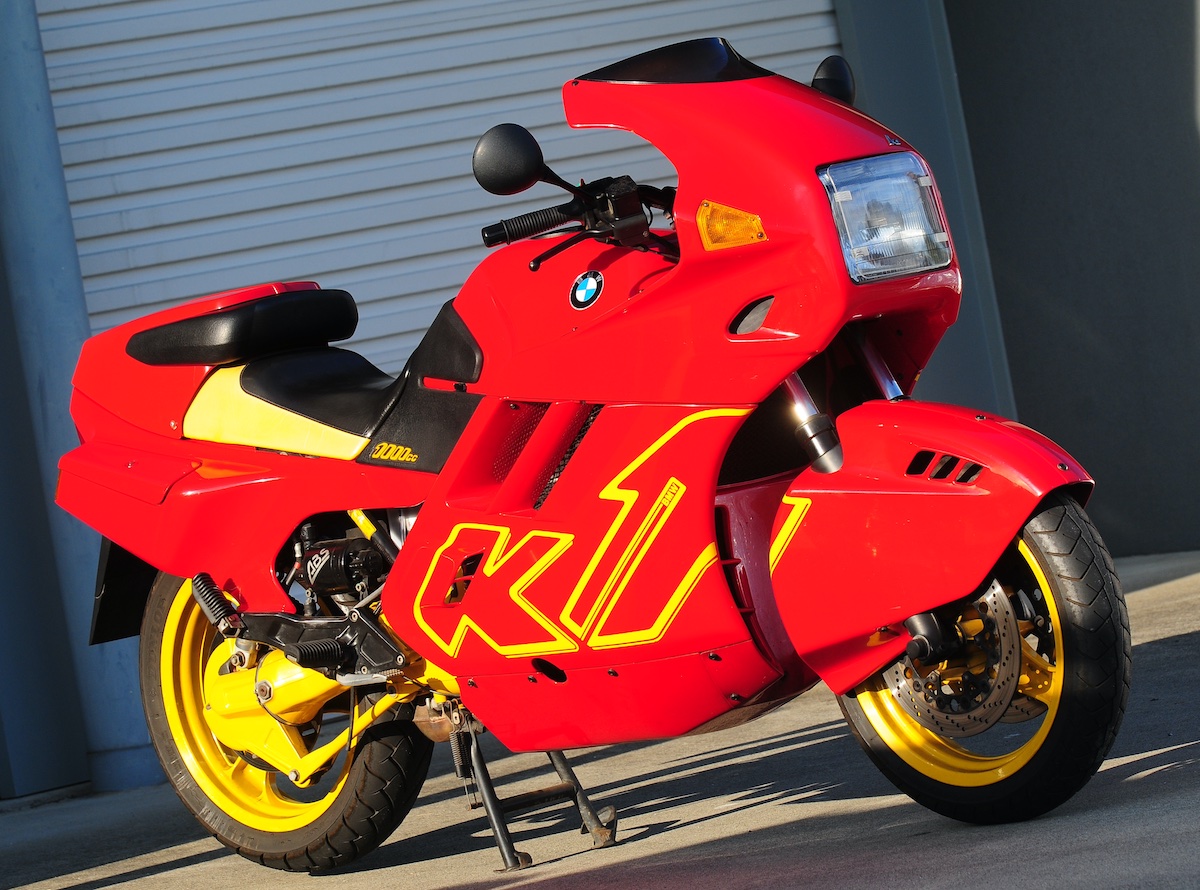
The K1 frame was beefed up significantly from the earlier K-series, while the wheel sizes were changed to 17 front and 18 rear.
Trialled for several years on the GS series, the Paralever shaft drive finally made it across to a full road machine. That too was quickly rolled out to the rest of the K range.
Anti-lock braking was featured after some initial stumbles (and remained optional in some world markets), while the bike gained four-piston Brembo calipers up front, with smaller pads on the leading edge and larger on the trailing set.
The turning circle was famously big thanks to restricted lock-to-lock angles.
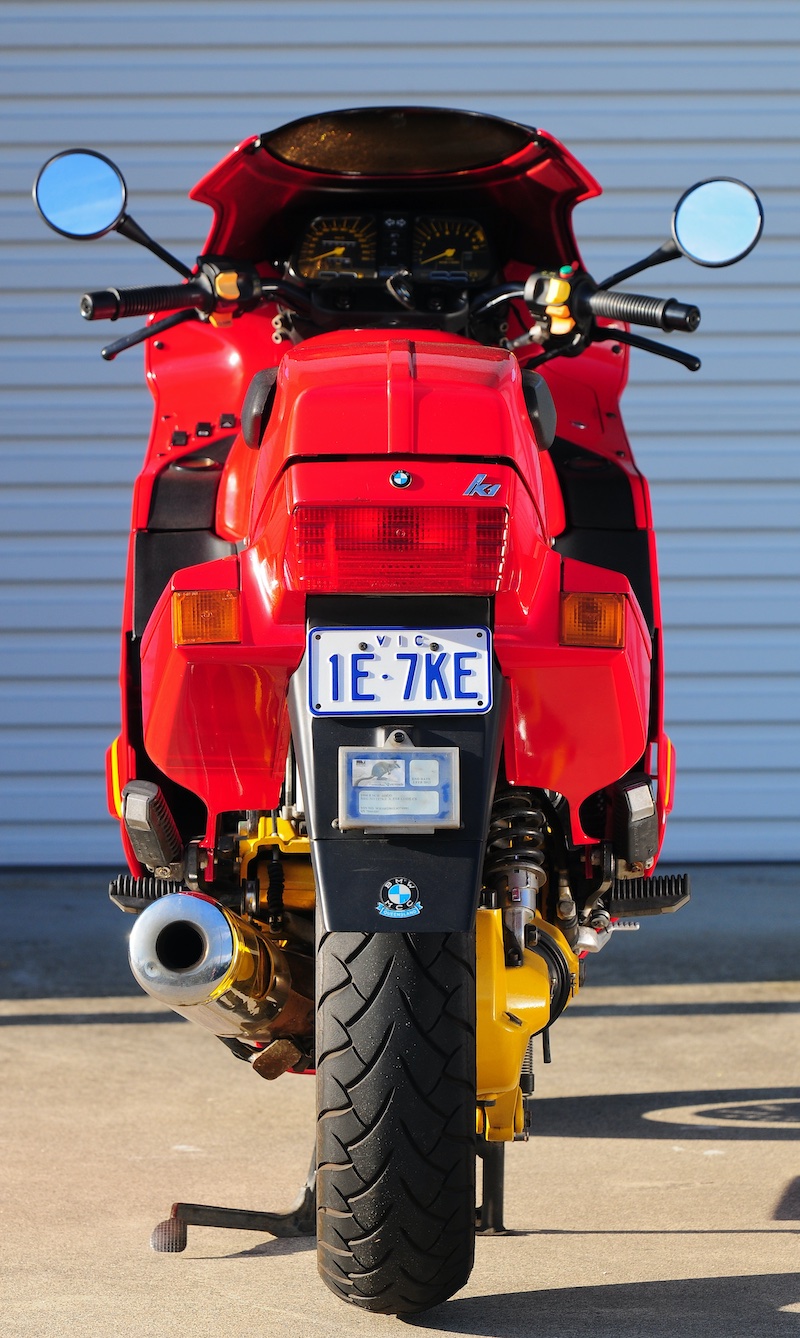
BMW developed the bike with controversial mini-panniers moulded into the rear cowling and offered add-on luggage, most notably an accessory tankbag. A trap for young players is the seat lock is hidden in the left panner.
It was long and heavy (somewhere between a K100RS and K100RT of the day) and down on power compared to most Japanese litre-bike headliners.
Suspension adjustment was severely limited, particularly given the price. That said, it was a very capable medium to high-speed sports-tourer with a rock-solid frame.
QUICK FIX
By this stage I’d been involved in enough project bikes to
know there really shouldn’t be a major cost in reviving
the thing. I rang the owner and confirmed the cosmetics
(which would be hugely expensive to replace) were fine, as
was the engine, when you chucked a new battery in it. He
came across as genuine, if baffled.
So what were the risks? Really, 101k shouldn’t be
anywhere near enough to kill a 16-valve K powerplant. So I
bought it, figuring if it all turned to shite, it could be
broken up for parts and the panels alone should cover the
cost.
Obviously I stuck a new battery in the day it arrived,
and it happily fired up. No smoke, no rattles, no
problems. The ABS lights were flashing when you rode it,
but an internet search quickly revealed a simple reset
which shut them up.
Now here’s the weird thing: I put a multimeter on the battery terminals, with the engine running, and it was clearly charging. So the issue was when it was left sitting. I pulled out the battery tender harness (five minutes) and replaced it with another.
Coat me in swarf and throw me to the engineers, it worked! From that day on, the K1 had no issues. What was the problem? It was a one in a million chance, but the original battery tender harness had been wired 180 degrees out. What was marked as positive was negative, and vice-versa. A little more investigation with the multimeter confirmed the diagnosis.
ON BOARD
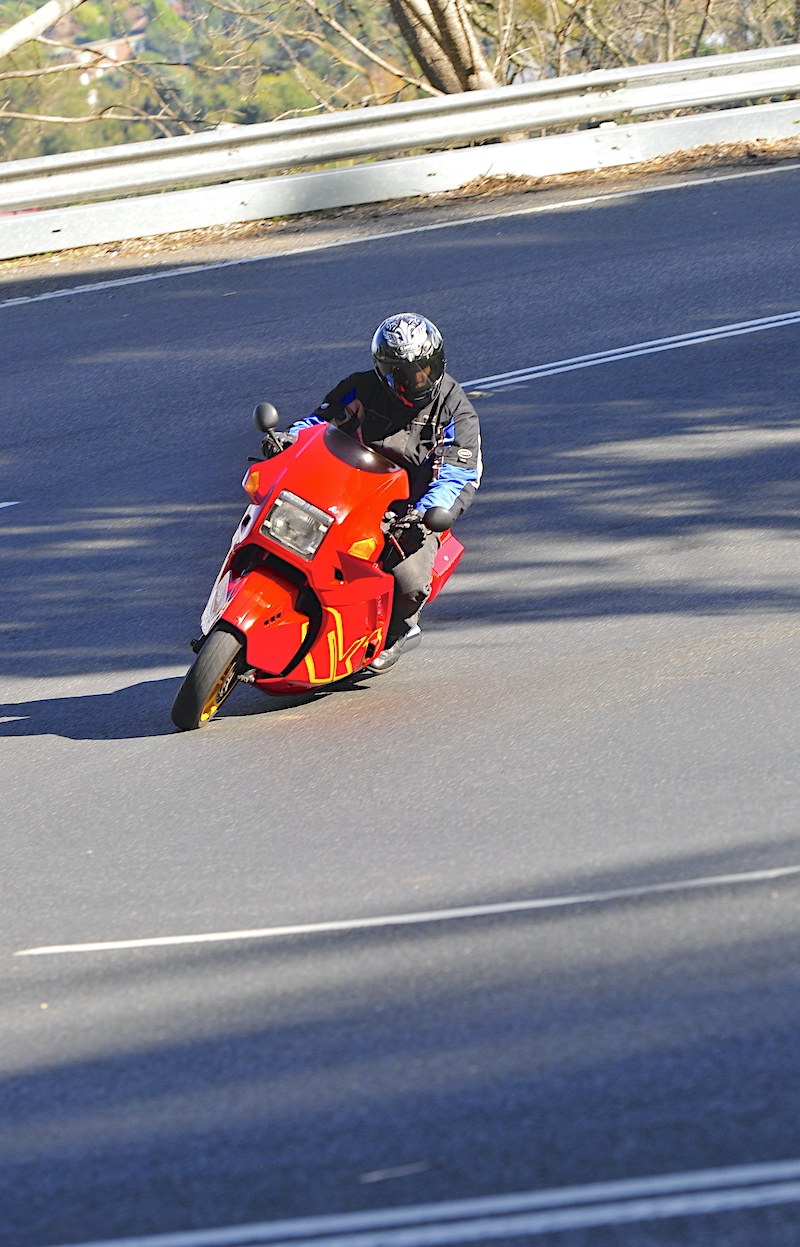
As a ride, it was exactly what you might expect. A little
tall and heavy around town, it would do the job but
clearly wasn’t happy.
On the highway it was a very different proposition, particularly if you could find somewhere to raise it to its natural cruising speeds of 120km/h-plus. Road tests of the day put the top speed at 240km/h and I'm confident it would have sat comfortably at 160 all day, if you could find the place to do it.
Though not fabulous in tight bends – a little too clumsy for that – it was delightful and rock solid through sweeping high-speed stuff.
The 16-valve engine was a significant improvement over
the eight-valver and still lacking in character. It had a
similar drone to its predecessor, when you would have
preferred a bark, whine or cackle. Nevertheless it was
smoother and more willing with a much-improved midrange.
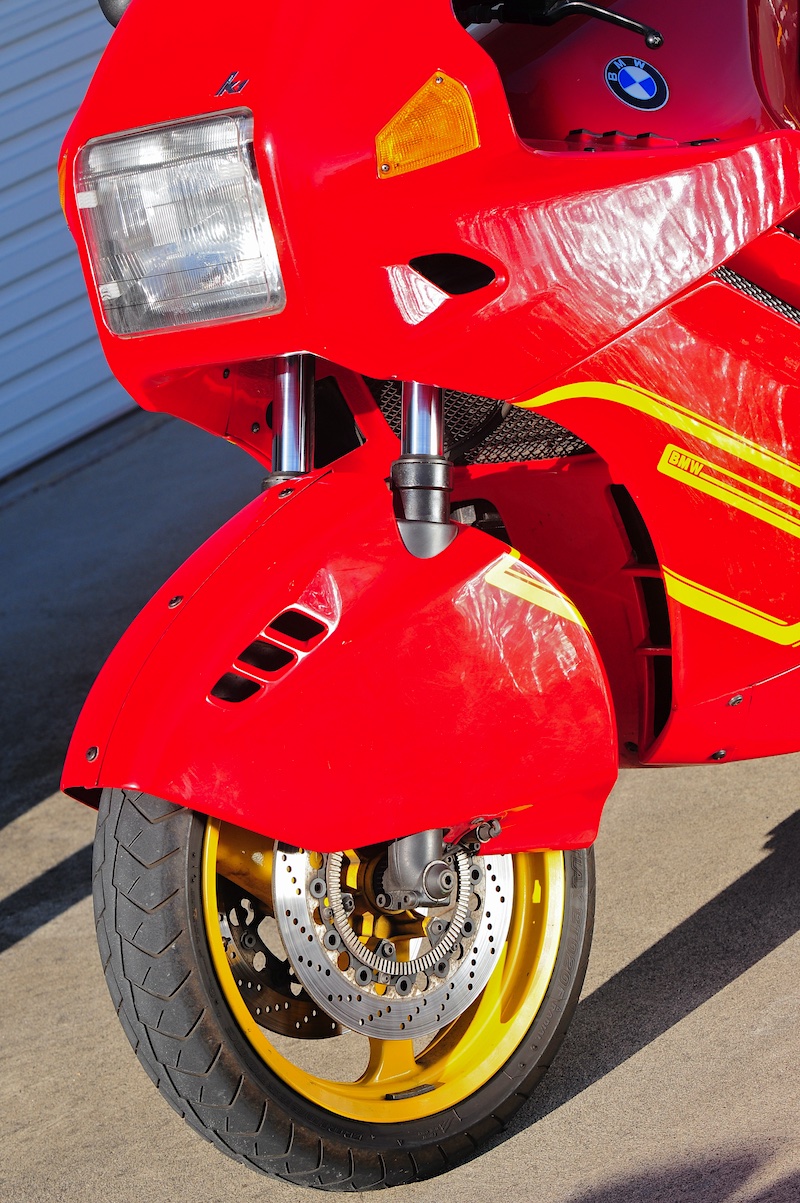
Braking was good for the day, with the four-spotter Brembos up front.
All up, it was a thoroughly enjoyable travel companion,
even if your luggage-carrying options were a little
limited.
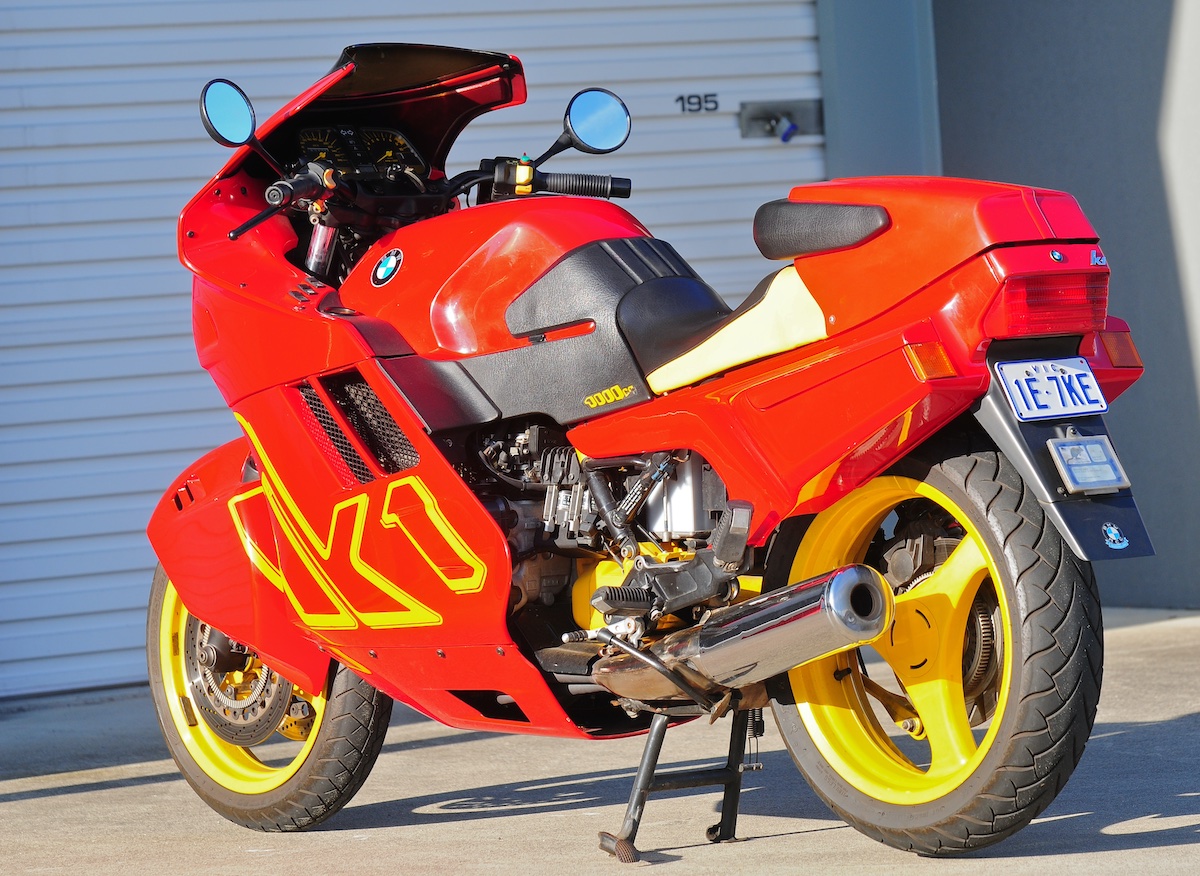
Would I have another today? In a heartbeat. The wild looks are divisive and BMW did eventually tone down the graphics, but I kinda like them anyway. And a little Devo in your life never did anyone any harm.
See our 2011 video review
Resources
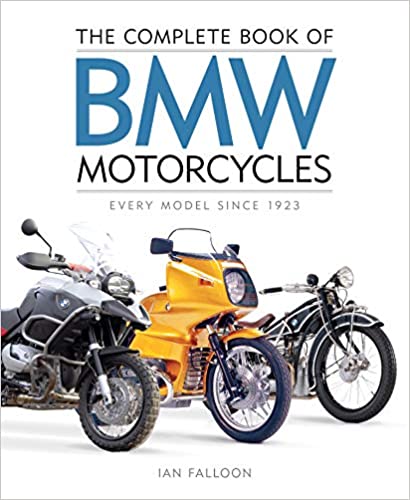
The Complete Book of BMW Motorcycles
By Ian Falloon, published by Motorbooks.com
Enthusiast site run by Andreas Esterhammer
Good
Capable sports tourer, with the emphasis on the latter
Oddball styling
Landmark model
Not so good
Oddball styling
Big turning circle
SPECS:
1988-89 BMW K1
ENGINE:
TYPE: Liquid-cooled, four-valves-per-cylinder, inline four
CAPACITY: 987cc
BORE & STROKE: 67 x 70mm
COMPRESSION RATIO: 11:1
FUEL SYSTEM: EFI
TRANSMISSION:
TYPE: Five-speed, constant-mesh,
FINAL DRIVE: Shaft
CHASSIS & RUNNING GEAR:
FRAME TYPE: Bridge-style steel
FRONT SUSPENSION: Telescopic fork
REAR SUSPENSION: Monoshock, preload adjustment
FRONT BRAKE: 385mm Brembo discs, four-piston calipers, ABS
REAR BRAKE: 285mm disc, Brembo one-piston caliper, ABS
DIMENSIONS & CAPACITIES:
DRY/WET WEIGHT: 235/268kg
SEAT HEIGHT: 780mm
WHEELBASE: 1565mm
FUEL CAPACITY: 22lt
TYRES:
FRONT: 120/70-17
REAR: 160/60-18
PERFORMANCE:
POWER: 73kW (100hp) @ 8000rpm
TORQUE: 100Nm @ 6750rpm
OTHER STUFF:
PRICE Au$17,000 plus on road costs


-------------------------------------------------
Produced by AllMoto abn 61 400 694 722
Privacy: we do not collect cookies or any other data.



Archives
Contact