
Motorcycle Investor mag
Subscribe to our free email news
Triumph T160 Trident revival
After a lay-off the triple is up
and running – Sunday shed wrap

Our 1975 Trident has been through its second big
'birthday' and is now better than ever
by Guy 'Guido' Allen, Oct 17 2026
Given how few miles this lovely 1975 Triumph T160 Trident
has done, it has had more than its fair share of workshop
attention.
It was recommissioned back in 2013 when I bought it with
just 2200 miles (3500km) on the odo.

Then we hit a kangaroo with it in 2014, which led to a
bit of cosmetic work, including a repaint of the fuel tank
by the legendary Ray Drever.

And here we are in 2026 when, at 3500 miles (5300km) on
the clock, it has been dragged out of the shed after a
year-plus lay-off and has come alive.
Somewhere in that intervening period I had a couple of
spectacular back-roads rides on this thing. While old-tech
and overtaken by the tsunami of rapidly-developing
machinery from Japan back when this bike was new, it was a
long way from being incapable.

I have a very good 1971 Honda CB750-Four K1 and 1975
GL1000 K0 for comparison. Above is a 2018 Australian
Motorcycle Trader magazine cover with both my Honda
and Triumph in close company.

The Trident has nothing to be ashamed of when it comes to
performance of the era – far from it. It handles very
well, has a lovely growl from the straight-triple engine
and is fast.

There were several variants across the globe and the one
you see here is known locally as a 'Melbourne-spec' bike:
which is a combination of English flat handlebars and slim
USA fuel tank with circa 13lt capacity versus 19 in the
UK.
A combination of old age (the bike, not me!), lack of
regular use and a too-casual attitude to maintenance meant
that, one day, the thing limped home and was not happy.
Fair enough. Frankly, I was surprised it had been so
tolerant.

With all the best intentions, I started ordering bits and
limbering up to work on it. The harsh reality is I'm okay
when it comes to basic tasks like changing oil and should
never pretend to be an engineer/mechanic – way above my
skill level. I need to stick to publishing.

And so, eventually, I flicked the project to Phil Pilgrim
at Union Jack
Motorcycles, who worked on these things when they
were new. That was back when Frank Mussett was running one
of the biggest Triumph dealerships in the southern
hemisphere (above) and Pilgrim was then the young workshop
manager.

Enough background. The job list for this bike was long
and it hadn't been ridden for a year. Fortunately, Pilgrim
and I are on the same page with any project like this.
Which is do it properly. For example, the tyres had lots
of tread and at about 12-years-old were timed out. Get new
ones and tubes as well.

The brakes needed work and so the master cylinders at
both ends were replaced. Up front, we went from a
traditional 5/8" (circa 16mm) bore down to 13mm. That made
a big difference to the feel of the front disc – sharper
and now much more workable.
We both wanted the T160 to start easily and perform that
little bit better. That meant a new Pazon digital ignition system
that included ignitor, coils, leads, plug caps and so-on.
Plus a set of resistor silver-coil spark plugs from
Brisk.

Again on the electrical front, we disconnected the old
Xener diode (under the headlight, above) and left it
in-situ to keep an original look. It was replaced with an
updated regulator/rectifier system.
Backing that up was a new Lithium-ion battery matched to
a Noco charging system.

Then there was the new, heavier-gauge drive-chain –
apparently the originals can let go and slap through the
engine cases. Rather like what Honda CB750s did back in
the day.

Along the way, Pilgrim spotted a few minor things that I
was blissfully unaware of, such as the missing rubber
cover for the ignition switch. Then he replaced the worn
patent plate on the right-side engine cover, and the
missing 5-Speed sticker just under the starter motor.
They are little things and in some way important. I was
very grateful to see those details back in place for what
is now a 51-year-old motorcycle.

Scanning the parts invoices reveals we have bought and
installed somewhere in the region of 80-ish parts on this
motorcycle though it still looks, thankfully, the same.

They include rebuild parts for the carburettors, a
replacement pushrod, plus new internals for the ignition
switch. The latter is a great example of how cheap
components are for Triumphs of this era. Above you can see
the corroded unit and the replacement was about Au$85 –
bargain!

And, so, what's it like to ride? When working properly,
this was always a good-handling machine. Now it's kind of
a modern motorcycle. So long as the battery is charged, I
can walk out and turn on the fuel, tickle the carbs, then
hit the starter. It goes and with a few minutes of warm-up
it's ready to idle evenly and go for a play.
It's still a 1970s motorcycle, though I'd suggest the
updates have moved it up a half-decade.

In the meantime, it has lost none of its personality. The
engine has that lovely triple growl and a quick flick into
a corner reminds you this was the top of the Triumph range
back in the seventies.

And now? It is simply a pleasurable and engaging ride.
***
-------------------------------------------------
Produced by AllMoto abn 61 400 694 722
Privacy: we do not collect cookies or any other data.
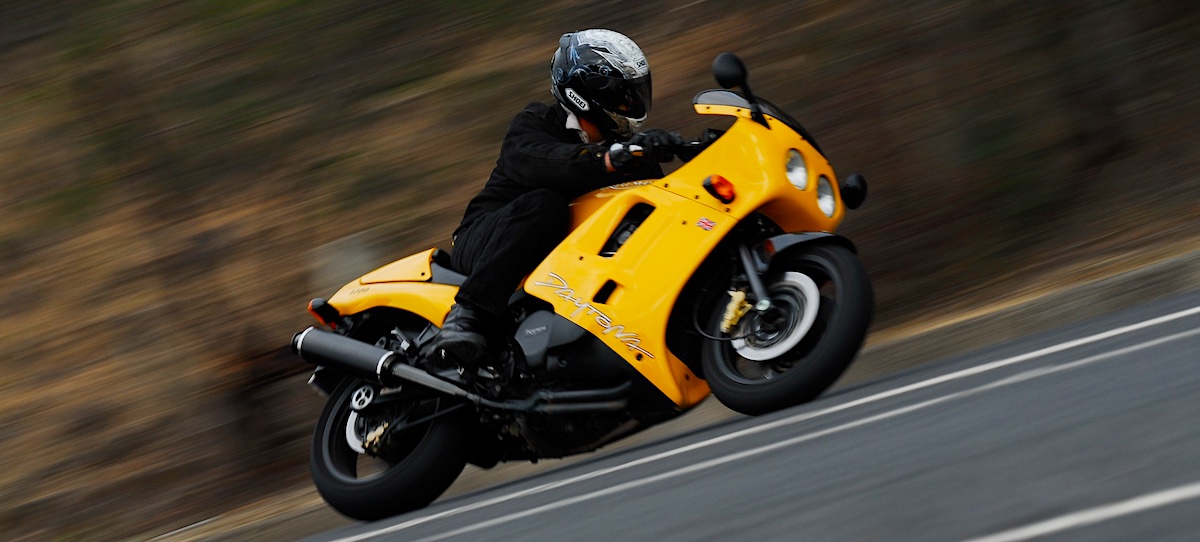
Top banner pic by the talented Stuart Grant!




Archives
Contact